Why Fortified Camps Feel Different (and Why That’s Good)
Open outdoor fights are about positioning.
Fortified fights are about entry.
Players aren’t just asking “where do we stand?” They’re asking:
- How do we get in?
- Do we rush the gate or sneak the edge?
- What happens if the alarm goes up?
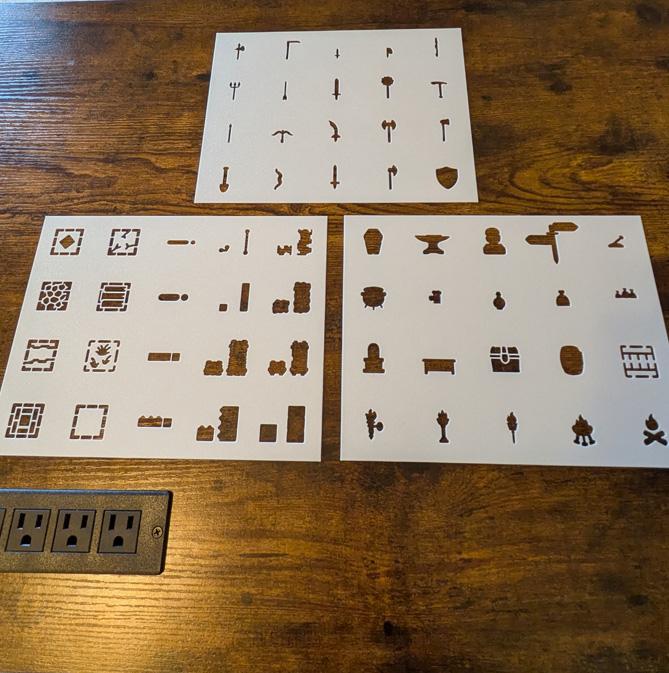
Your stencils make this easy:
- Spike Wall = hostile perimeter (don’t climb casually)
- Fence Wall = interior organization (pens, lanes, guard zones)
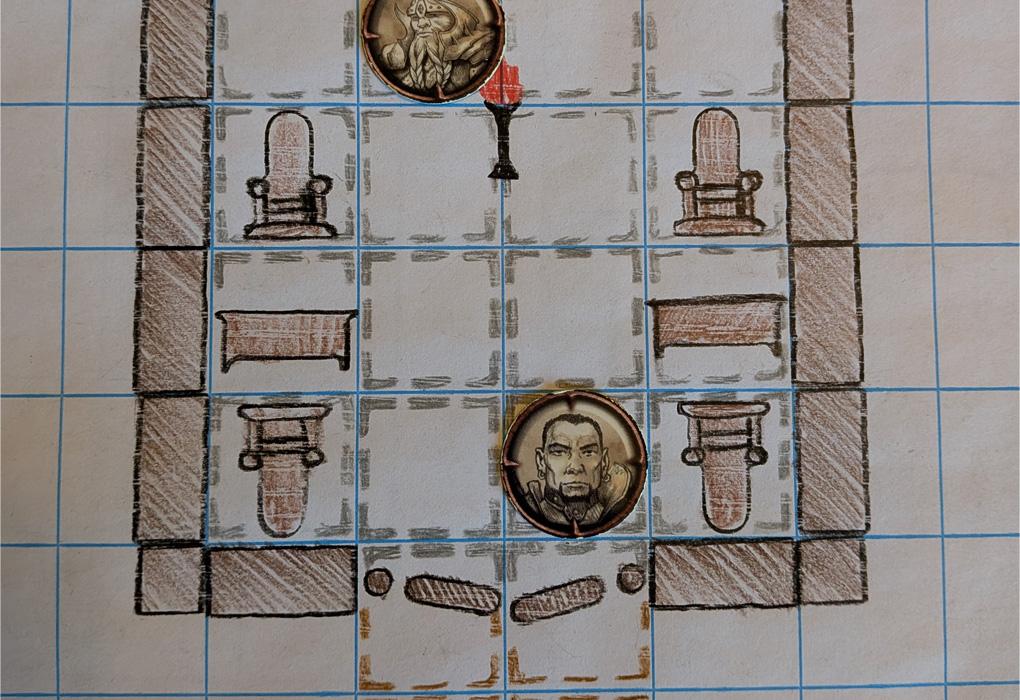
- Doors as gates (Large Door / Square Door / Spiked Door / Small Door) = entry choices
- Torches (Standing Torch / Wall Torch / Tiki Torch) = visibility and pressure cues

Spike Wall vs Fence Wall (Use Them Together)
- Spike Wall is your outer skin: it says “keep out” and creates a perimeter problem.
- Fence Wall is your inner layout: it creates lanes, pens, and controlled zones once inside.
> Tip
> If the whole camp is only spike wall, it feels like a cartoon fortress. Add Fence Wall inside so it feels lived-in and functional.
Gates: Door Stencils as Tactical Choices
Your gate should be obvious. Your gate should also be a dilemma.
Use door stencils as “gate language”:
- Large Door = main gate, high traffic, “this is the front”
- Square Door = heavy gate, reinforced, “this is controlled”
- Spiked Door = intimidation gate, “we expect trouble”
- Small Door = side sally port / service gap (great for stealth)
Gate placement that plays well
- Place the gate on a straight approach lane so the assault option is clear.
- Keep the gate area at least 2 squares wide so combat doesn’t jam instantly.
- Add a “gate pocket” inside (a small fenced lane) so defenders can fight from cover.
> Warning
> If there’s only one way in and it’s the gate, the encounter becomes a binary slog. Give at least one alternative entry option.
Breach Points: The “Smart Plan” Option
Players love feeling clever. Breach points create planning.
Ways to show breach options using only your stencils:
- a short section of Fence Wall instead of spike wall (weaker edge)
- a deliberate gap in the spike wall (collapsed, repaired, unfinished)
- a “dark edge” with no torches (sneak route)
- a Small Door side entry (service access)
> Tip
> Put the breach route on the opposite side of the main gate so the party has to choose: speed vs stealth.
Torches Control Stealth (and Tension)
Torches don’t just light the scene—they shape tactics.
Lighting language for fortifications:
- Standing Torch at the gate = active guard attention
- Wall Torch near important structures = permanent “this matters”
- Tiki Torch along the perimeter = ritual / intimidation / “this is a boundary”
A simple stealth design:
- make the gate zone bright (2 torches)
- make one perimeter side dim (0–1 torch)
Now stealth players have a clear, fair route.
Siege-Style Encounter Structure (So It Doesn’t Feel Like a Grind)
Good fortified encounters have phases.
Use this structure:
1) Approach (spot patrols, choose route)
2) Entry (gate rush or breach)
3) Interior objective (free prisoners, steal goods, stop ritual)
4) Escape (alarm goes up, reinforcements, chase)
> Tip
> Put the objective somewhere that forces movement after entry—otherwise the fight stays at the gate forever.
# Three Fortified Camp Templates
These templates are designed to be drawn fast and played in clear phases.
Template 1: Raider Camp (Simple + Brutal)
Best for: short fights, quick raids, “hit and run” missions
Stencil recipe
- Outer perimeter: Spike Wall (simple loop)
- One main gate: Spiked Door or Large Door
- 1 interior divider: Fence Wall creating a guard lane
- Lights: 2 Standing Torches at the gate, minimal elsewhere
- Anchor: Campfire central (where raiders gather)
Why it plays fast
- obvious entry
- clear fight lanes
- central objective (campfire area)
Template 2: Outpost (Layers + Routes)
Best for: longer encounters, stealth + assault mix, small “siege” feel
Stencil recipe
- Outer Spike Wall perimeter
- Gate 1: Square Door (main)
- Gate 2: Small Door (side sally port)
- Interior Fence Wall creates two zones (storage + barracks feel without drawing it)
- Lights: gate zone well-lit, side route dim
How it plays
- party chooses assault or infiltration
- defenders fall back to the inner fence line
- you get a natural “phase 2” fight inside
Template 3: Ritual Stockade (Objective + Time Pressure)
Best for: cultists, sacrifices, “stop it before it finishes”
Stencil recipe
- Outer Spike Wall perimeter
- Gate: Spiked Door (menacing) or Square Door (controlled)
- Interior ring: Fence Wall as a ritual boundary
- Lights: Tiki Torches as ritual markers, plus 1–2 standing torches at the gate
- Objective center: Campfire as the ritual flame (or gathering point)
How it plays
- players must push past defenses to reach the center
- torches create “zones” that feel dangerous
- it naturally becomes a race: entry → objective → escape
Common Fortified Camp Mistakes (Easy Fixes)
- Only one entry option: add a breach point, gap, or side door.
- Gate too narrow: make it at least 2 squares wide so combat doesn’t jam.
- No interior objective: add a central anchor (campfire/ritual) so the fight moves.
- Everything lit: leave a dark edge so stealth exists.
- Too many fences: one perimeter + one interior divider is usually enough.
Next Steps
To connect fortified camps into bigger adventures:
- lead from the stockade into a dungeon entrance (swap to Stone Wall corridors)
- turn the outpost into a town compound (swap spikes to Fence Wall and add cobble paths)
- build a “siege ladder” campaign arc by increasing layers: one gate → two gates → inner fence ring
With Spike Walls + Gates + Light, you can make outdoor encounters feel tactical, cinematic, and totally different from open-field fights.