Why Graveyards Make Great Encounters
Graveyard fights feel different because:
- visibility is limited
- cover is everywhere
- the space is emotionally loaded
- every corner suggests something waiting
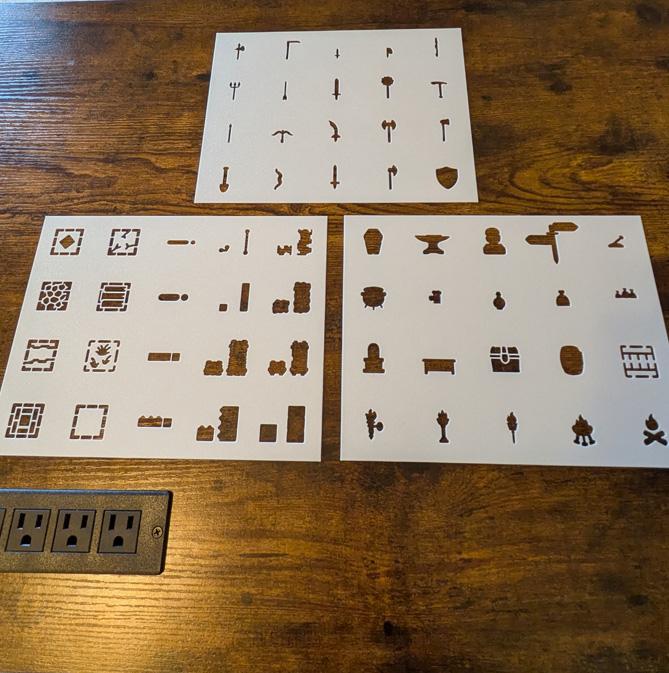
Stencil-wise, you can create that vibe fast with:
- Gravestone (cover + mood)
- Ruined Wall (line-of-sight blockers + “broken chapel” energy)
- Stone Floor and Cracked Floor (paths and “difficult terrain” cues)
- Torches (Wall Torch, Standing Torch, Tiki Torch) for night fights

Line-of-Sight Blockers: Break Up the Shooting Gallery
The main danger of “open outdoor maps” is long sightlines. Graveyards fix that naturally.
Two stencil tools do the heavy lifting:
- Ruined Wall blocks sight and creates corners
- Gravestone breaks up lanes and creates micro-cover
Fast LoS rules (map-design, not game rules)
- Place 1–2 ruined wall fragments to split the map into zones
- Cluster gravestones in groups of 3–6 to create “cover pockets”
- Keep at least one clear lane so players can move with confidence
> Tip
> Put ruined walls near the middle and gravestones near edges. It keeps the center dramatic without making the map unreadable.
“Difficult Terrain” Vibes Using Texture (Rules-Light)
Even if you don’t want to track movement cost, texture tells players what feels risky.
Use texture language:
- Stone Floor = safe path (old cemetery walkway, chapel approach)
- Cracked Floor = broken ground (sunken graves, collapsed stones, unstable ruins)
- Optional base: Grass Floor = the open field around paths
Easy terrain zoning recipe
- Draw a stone “main path” with Stone Floor
- Add 2–4 cracked patches with Cracked Floor off the path
Now players see:
- where it’s safe to move fast
- where the ground feels dangerous and slow
> Warning
> Too many cracked patches makes the map visually noisy. Use them sparingly as “danger islands.”
Horror Readability: The Map Should Be Clear, Not Confusing
Horror encounters work when players understand the space—then fear comes from what they don’t see.
The arm’s-length test
Step back and check:
- can you see the paths?
- can you identify gravestones instantly?
- do ruined walls read as solid blockers?
If not: remove a few elements and increase spacing.
Night Fights: Torch Pools Create Safe Zones (and Traps)
Torches let you “stage” a night fight by creating pools of visibility.
Lighting language:
- Wall Torch = permanent light (chapel wall, mausoleum entrance)
- Standing Torch = temporary light (guards, investigators, cultists)
- Tiki Torch = ritual boundary, eerie markers, “this is not normal”
Torch placement trick
Place torches to create:
- one safe route (lit path)
- one risky shortcut (dark area with cracked ground)
Players will choose the vibe they want—and that’s great gameplay.
Layout Blocks: Lane + Ruin + Field
If you’re improvising, build graveyards from three blocks:
1) Gate lane (path in)
2) Ruined chapel zone (walls + stone floor)
3) Scattered grave field (gravestones + grass)
Scene Option: The Ruined Chapel (Instant Boss Zone)
A ruined chapel outdoors is the perfect set piece because it creates:
- corners
- cover
- dramatic entrances
- a clear “center” of conflict
Stencil recipe
- Use Ruined Wall to outline a broken chapel footprint
- Add Stone Floor inside as the “old sanctuary”
- Add Cracked Floor patches where the roof collapsed
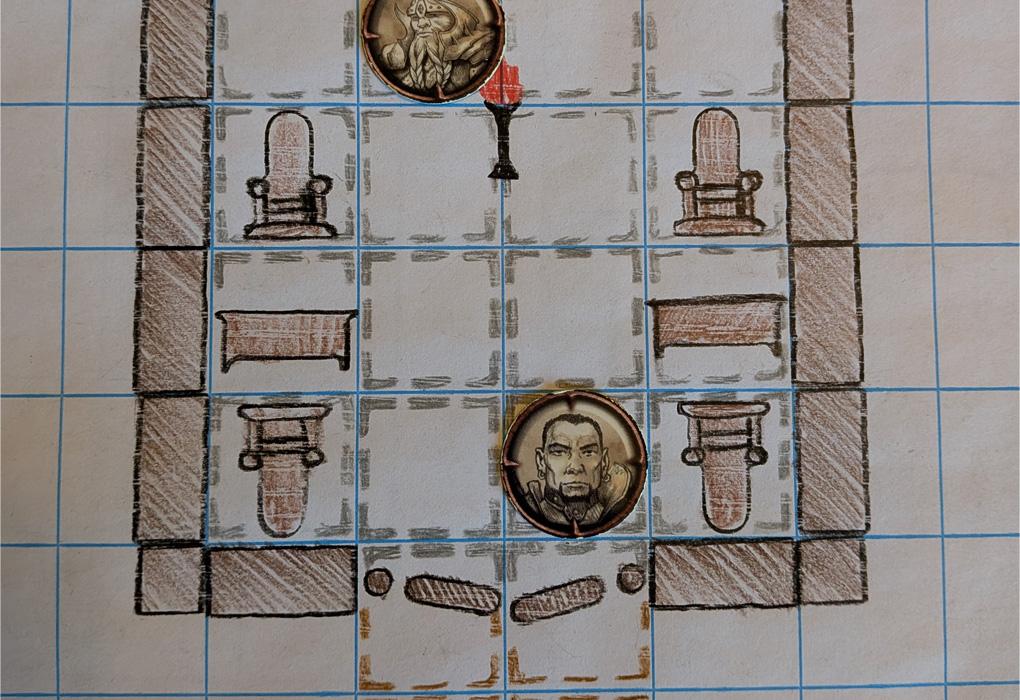
- Place 2 Wall Torches at the entrance (if it’s maintained) or 2 Tiki Torches (if it’s ritual)
- Scatter Gravestones outside to break up sightlines
> Tip
> Keep the chapel interior relatively open. Let the ruins be the cover, not clutter.
Common Mistakes (Easy Fixes)
- Gravestones evenly spaced like a grid: cluster them into pockets (it feels natural and plays better).
- Ruined walls everywhere: 1–2 wall fragments do more than 10.
- Too many textures: use stone for paths and cracked for danger—keep it simple.
- Everything lit: leave darkness so the fight feels like a night encounter.
Next Steps
To connect graveyards to bigger adventures:
- lead from the grave path into a tomb entrance (swap to Stone Wall and Coffin inside)
- turn ritual torches into a trail (use Tiki Torches as markers)
- place a signpost nearby for a “town edge” connection (Signpost + cobble path)
Graveyards are a best-in-class encounter map because the stencils naturally create mood *and* tactics—without slowing the game down.