Why Inn Back Areas Matter
Most inn maps show the common room… and then stop. But the *real* adventure hooks live behind the scenes:
- the office where ledgers hide secrets
- the storage room where contraband gets tucked away
- the cellar where “harmless rats” become an encounter
- the staff corridor that becomes a chase route
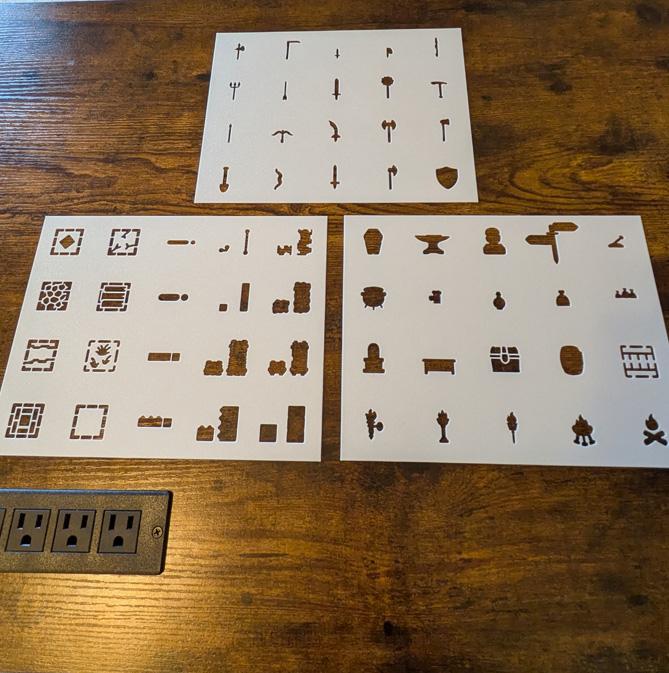
You can build all of that quickly with:
- Small Door
- Wood Wall + Wood Floor
- Crate / Barrel / Chest / Bags / Bag / Bags on table
- Wall Torch + Standing Torch

The Inn Flow That Always Feels Real
A believable inn has layers:
1) Public (common room)
2) Staff (hallways, office)
3) Private (storage, locked rooms)
4) Secret (cellar, hidden stash, escape route)
Stencil rule
Use Small Door to control who belongs where:
- public → staff (one small door)
- staff → private (another small door)
- private → secret (a third small door, often unlit)
> Tip
> Two small doors between the common room and the cellar makes the cellar feel *hidden* even if it’s right below them.
How to Make Non-Combat Rooms Still Useful
A non-combat room should still create choices:
- Do we search or move on?
- Do we confront someone?
- Do we steal the thing?
- Do we risk getting caught?
Prop language: what each stencil “means”
Use props as readable signals:
- Bags on table = paperwork, counting coin, sorting goods (CLUE ZONE)
- Chest = valuables, lockbox, “this matters”
- Crate = general storage, shipping, supplies
- Barrel = food/drink stores, “cellar energy,” cover in fights
- Bags / Bag = grab-and-go items, personal stash, contraband
> Tip
> For a “clue room,” place Bags on table and *one* Chest nearby. Players will instantly investigate.
Lighting Cues: Torch vs No Torch
Lighting makes inn back areas feel alive (or suspicious).
Use this simple language:
- Wall Torch = permanent light (normal operation)
- Standing Torch = active work (someone is here now)
- No torch = off-limits, hidden, or abandoned (suspicious)
Fast “mystery” trick
Make the office well-lit (Wall Torch), but the storage room unlit. Players immediately suspect a hidden door, stash, or secret meeting.
# Back Area Rooms You Can Draw in Minutes
These are building blocks. Mix and match.
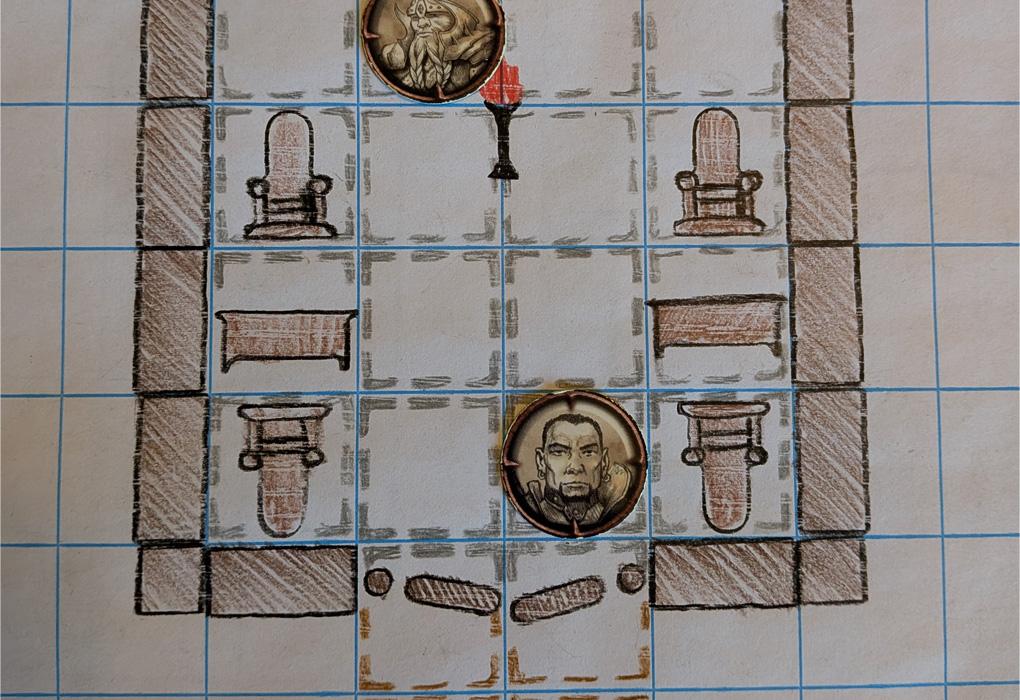
1) The Office (Where Secrets Hide)
Stencil recipe
- Wood Floor + Wood Wall
- 1 Small Door from staff hall
- Bags on table (ledger, keys, notes)
- Optional Chest (lockbox)
What it does:
- instantly communicates “search me”
- creates roleplay: bribery, blackmail, confrontation
2) Storage Room (Loot That Makes Sense)
Stencil recipe
- Crates along one wall (inventory)
- Barrels near the cellar door (kegs)
- Bags near exits (ready to move)
- 1 Chest only if there’s “important” loot
What it does:
- provides natural loot spots
- creates cover if things go loud
3) Staff Corridor (The Chase Route)
Stencil recipe
- narrow hall with Small Doors to each back room
- place one Standing Torch near the busiest section
What it does:
- turns tavern scenes into chases instantly
- gives NPCs believable movement paths
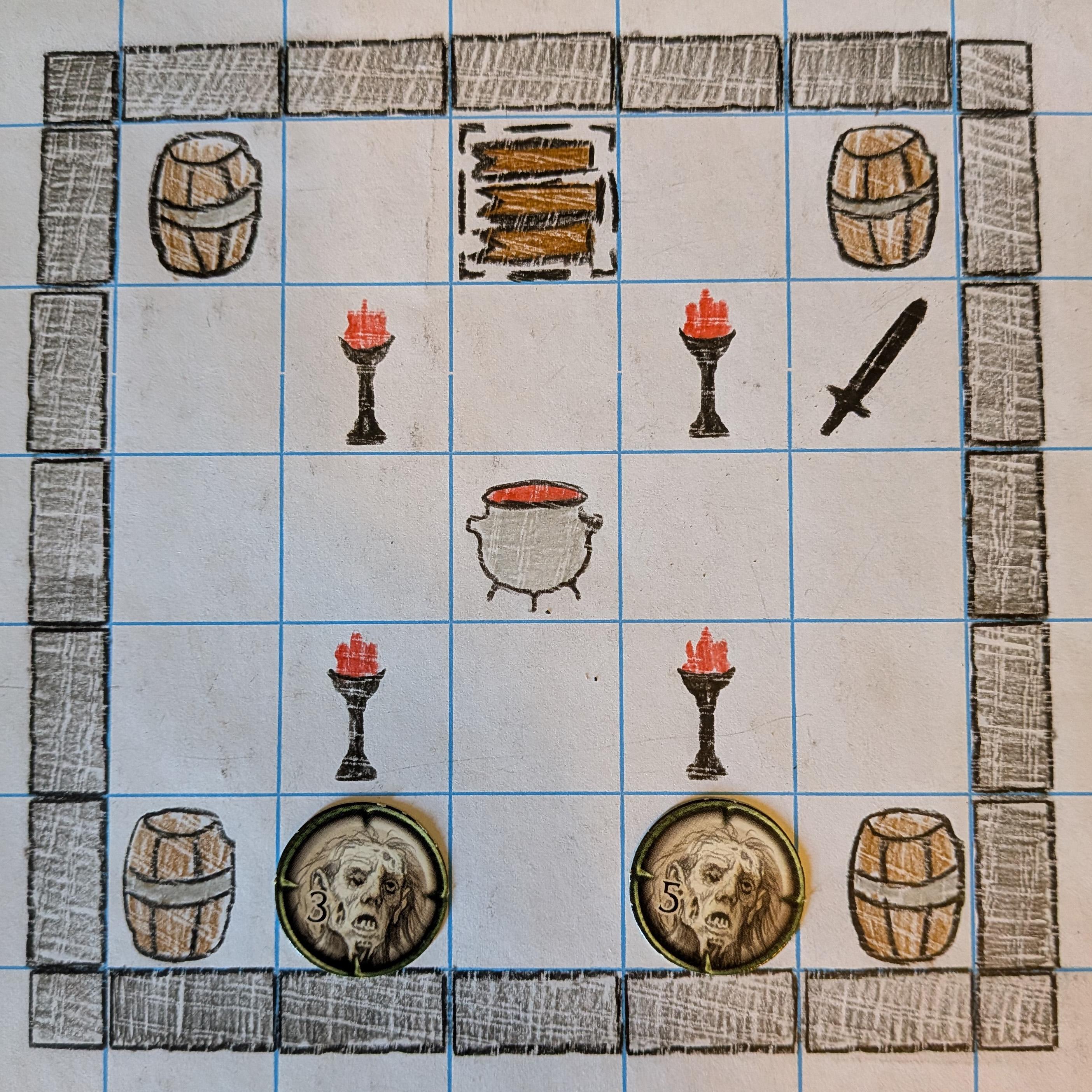
# Included Encounter: The Cellar Fight (Barrels + Crates + Torches)
Cellars are perfect because they’re:
- tight enough for tension
- messy enough for cover
- believable as a “secret” space
The Cellar Encounter Layout
Goal: create a fun fight without a complicated map.
Stencil recipe
- Wood Floor (or Stone Floor if you want it older)
- Perimeter with Wood Wall (or Stone Wall if it’s under the city)
- 1 entry Small Door (from storage)
- 3–6 Barrels in clusters along walls (cover + kegs)
- 2–4 Crates creating one chokepoint lane
- 1 Wall Torch near the stairs/entry (normal cellar lighting)
- 1 Standing Torch near the “objective” (someone was just working here)
- Optional: a Chest in the far corner (reward) OR Bags (contraband)
How it plays (fast)
- players advance through a clear lane
- enemies duck behind barrels
- the standing torch marks a “hot spot” (the thing to protect/steal/stop)
> Tip
> Keep the center mostly open. Put barrels and crates on edges so minis can move without bumping every turn.
Common Mistakes (Easy Fixes)
- Everything becomes storage: leave breathing room; one cluster per wall is enough.
- Too many doors: use small doors strategically to control access.
- Loot hidden in clutter: if it matters, make it a Chest.
- No clue signals: add Bags on table to any room that’s meant to be searched.
Next Steps
To connect your inn to bigger adventures:
- turn the cellar into an undercity route by swapping Wood Wall → Stone Wall
- add a hidden stash pattern: Chest + Bags in an unlit corner (no torch)
- place a “meeting zone” upstairs using Bags on table as the negotiation focus
Once you have the back areas, your inn becomes more than a backdrop—it becomes a playable location that can carry an entire session.