The Outdoor Map Problem (and the Fix)
Outdoor encounters can get weirdly slow because everything looks the same: “it’s just grass.”
The fix is simple: make zones and light do the storytelling.
- zones tell players where they can move
- light tells them where the action is
- props create cover and choices
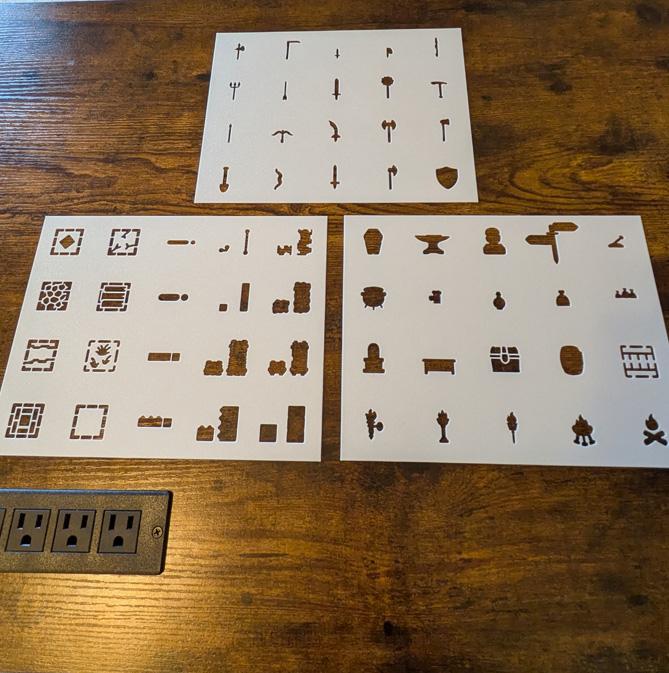
Your stencil toolkit for fast outdoor camps:
- Grass Floor (the base)
- Campfire (the anchor)
- Tiki Torch / Standing Torch (light cues)
- Fence Wall (control + chokepoints when you need them)
- Bags / Bag / Crate / Barrel (cover + supplies)
- Optional: Cauldron (witch camp focal station)

Step 1: Build the Terrain as Zones (Not Details)
Even if everything is “grass,” you can still create readable zones:
- open lane (movement)
- edge clutter (cover)
- focal zone (firelight)
The outdoor lane rule
Leave at least one 3–5 square wide open lane across the camp so:
- melee can close distance
- ranged can reposition
- the scene doesn’t become a prop maze
> Tip
> Outdoor maps should feel like they have *air*—don’t fill them like dungeon rooms.
Step 2: Firelight is a Spotlight (Use It Like One)
Firelight is your “attention tool.” Players will naturally move toward it or away from it.
Use light stencils as different signals:
- Campfire = the social center / objective
- Standing Torch = “someone put this here recently” (active guards)
- Tiki Torch = perimeter markers, spooky vibes, ritual boundaries
Simple light design:
- Put the Campfire slightly off-center (so it doesn’t block movement)
- Place 2–4 torches to create “safe lit islands” and “dark approaches”
> Warning
> If everything is lit, the encounter loses tension. Leave darkness routes.
Step 3: Prop Clusters = Cover Without Clutter
Use clusters to create cover and “supplies vibe” quickly.
Three reliable camp clusters:
- Crate + Barrel = sturdy cover, storage
- Bags + Bag = traveler supplies, softer cover, “protect this”
- Crate + Bags = mixed supplies, messy but readable
Placement rule:
- clusters go near edges and corners, not in the center lane
Step 4: Ambush Angles (Where Attacks Actually Come From)
Outdoor ambushes feel great when players can see:
- where enemies could hide
- how the camp is defended
- what route is safest
Ambush angle tricks with your stencils:
- Use Fence Wall to create one protected side and one exposed side
- Place torches on one side so the other side is a shadow approach
- Put cover clusters so attackers can leapfrog forward
> Tip
> A great ambush map has one obvious safe route and one risky fast route.
# Three Camp Templates (Bandit, Pilgrim, Witch)
Each template is designed to draw fast and run faster.
Template 1: Bandit Camp (Controlled Space + Cover)
Bandits like control. They fence things. They set chokepoints.
Stencil recipe
- Grass Floor base
- Partial perimeter using Fence Wall (not a full box—leave gaps)
- Campfire as the anchor
- 4–6 cover clusters (mostly Crate + Barrel) near fence edges
- Standing Torches near chokepoints (guards)
- Optional: Tiki Torches as “warning markers”
How it plays
- defenders use crates/barrels as cover
- attackers choose: rush the firelight or flank through shadows
- fence creates choke lanes without turning it into a dungeon
Template 2: Pilgrim Camp (Open + Social + Protectable)
Pilgrim camps are vulnerable and emotionally interesting:
- supplies to protect
- civilians to avoid harming
- lots of “why are you here?” roleplay
Stencil recipe
- Grass Floor base
- Minimal Fence Wall (one pen zone or a small boundary)
- Campfire center
- Supplies: mostly Bags / Bag clusters with a few Crates
- Light: 1–2 Standing Torches near the main path (not militarized)
How it plays
- fights feel messy because supplies are everywhere (but clustered)
- players care about where enemies push/shove people
- lots of “protect the campfire center” energy
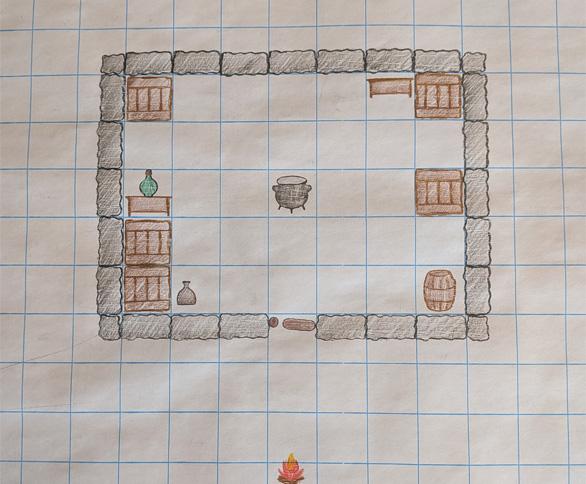
Template 3: Witch Camp (Ritual + Focal Station)
Witch camps need one thing: a focal station that screams “this is the plot.”
That’s your Cauldron.
Stencil recipe
- Grass Floor base
- Cauldron in the focal zone (near the fire)
- Campfire nearby as the ritual heat source
- Tiki Torches in a loose ring to imply ritual boundaries
- Add 1–2 Standing Torches if you want “someone is actively working”
- Place a couple Bags and a Crate near the cauldron (ingredients)
- Optional: Fence Wall fragment (captured animals, herb drying area)
How it plays
- players immediately investigate the cauldron
- torches create “zones” (step into the ring = consequences)
- it’s easy to run as combat or negotiation
Common Outdoor Camp Mistakes (Easy Fixes)
- No open lane: leave a wide movement path so the fight doesn’t clog.
- Props scattered randomly: cluster them (supplies read better and play better).
- Everything lit: keep a dark approach so ambushes feel possible.
- Fence makes a box: use partial fences; leave gaps and choices.
Next Steps
To turn an outdoor camp into a mini-adventure:
- connect it to a town road using Cobble Stone Floor and a Signpost
- add a perimeter that becomes a tactical fight using Fence Wall
- escalate into an undercity dungeon by swapping to Stone Wall tunnels nearby
With Grass + Firelight + Clusters, you can run outdoor encounters that feel cinematic *and* stay readable at the table.