Why Crossroads Encounters Work So Well
A crossroads is instantly understandable:
- there are clear routes
- there’s a natural place to stop
- everyone knows what a signpost means
And that makes it perfect for travel scenes, ambushes, and investigation.
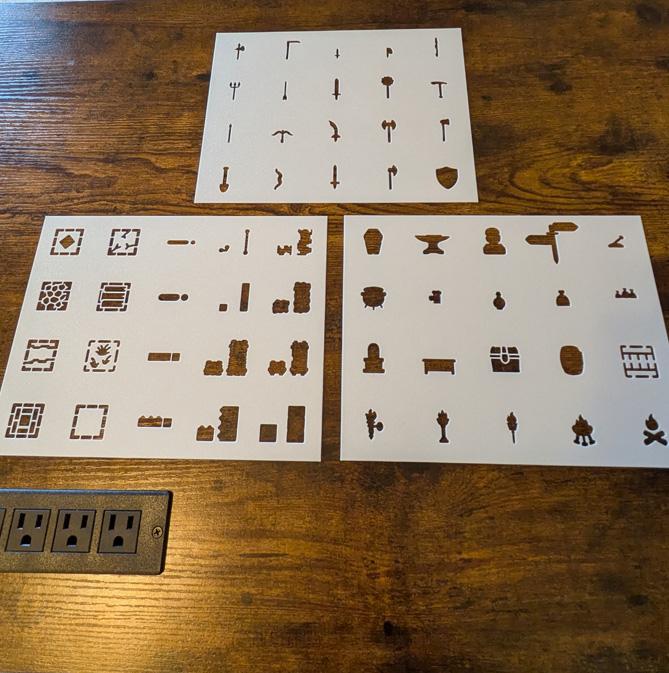
Your stencil toolkit for a great crossroads:
- Signpost (objective marker)
- Crate / Bags / Bag (loot, cover, wagon spill stand-ins)
- Standing Torch / Wall Torch / Tiki Torch (night scenes, attention, danger cues)

The Simple Travel Encounter Structure (So It Doesn’t Drag)
Most travel encounters become slow when players don’t know what they’re supposed to *do*.
Use this structure:
1) Approach (players see the crossroads)
2) Trigger (something makes them stop)
3) Choice (take the bait, detour, investigate, fight, flee)
Your map can support this structure by placing:
- the Signpost as the trigger
- loot props as bait/clue
- a chokepoint as the “choice pressure”
The Signpost Is an Objective Magnet
Players will almost always:
- read it
- inspect it
- argue about which route to take
- assume it hides something (and sometimes it should)
Signpost placements that feel natural
- center of the intersection (classic)
- slightly off-center (so it doesn’t block minis)
- near the “main road” but visible from all approaches
> Tip
> Put the signpost where you want the party to *stop.* Then you control pacing without railroading.
Loot Stand-Ins: Crates + Bags Tell the Story
You don’t need wagons to tell a “wagon scene.”
A few props do the job.
Use these quick recipes:
- Crate + Bags = supplies spilled from a cart
- Bag alone = dropped purse / suspicious package
- Bags on table (if you want) = “someone was sorting goods here” (camped briefly)
Where to place loot/clues:
- near the signpost (so it’s discovered naturally)
- slightly off the road (so players choose to deviate)
- in a “blind corner” created by cover (so it feels like bait)
> Warning
> Don’t hide every clue. Travel scenes are quick—make the important clue obvious.
Natural Chokepoints (Without Drawing Terrain Features)
You can create a chokepoint using just clutter:
- crates
- bags
- light cues
Chokepoint recipe:
- place 2 Crates on one side
- place Bags on the other side
- leave one clear lane through the middle
Now the party has to decide:
- push through
- detour off-road
- investigate first
# Three Crossroads Scenes (Safe, Suspicious, Deadly)
These are plug-and-play. Draw the same crossroads shape every time and just swap dressing.
Scene 1: Safe Crossroads (Roleplay + Foreshadow)
Best for: directions, rumors, meeting an NPC messenger
Stencil recipe
- Signpost clearly visible at the intersection
- 1–2 torches (choose one):
- Standing Torch near the post for “maintained road”
- Tiki Torch if it’s a rustic route
- Minimal loot: one Bag near the post (a dropped package hook)
Why it works
- clean, readable, quick
- signpost becomes a natural “stop point”
- the bag is an optional hook, not a distraction
Scene 2: Suspicious Crossroads (Clues + Unease)
Best for: investigation, “something happened here,” tracking
Stencil recipe
- Signpost (but maybe unlit)
- Crates slightly off the road (like a spill)
- Bags scattered near the crates (supplies lost)
- One torch that feels wrong:
- a single Standing Torch placed oddly near the loot
Clue placement tips
- put one bag *separate* from the pile (someone ran)
- put one crate *broken open* (implied theft)
- keep the main path clear so players can position easily
Scene 3: Deadly Crossroads (Ambush + Kill Zone)
Best for: bandit ambush, assassins, monster attack
Stencil recipe
- Signpost as bait (the stop point)
- Create a chokepoint with:
- 2 Crates and 2 Bags narrowing the road
- Place torches to create a kill zone:
- Standing Torch near the signpost (spotlight)
- optional Tiki Torch off to one side (false safety)
- Add one “treasure” cue:
- a Bag alone in the open (obvious bait)
Why it’s deadly
- players stop at the post
- lane narrows near the bait
- lighting makes the danger feel intentional
> Tip
> For deadly scenes, keep the center lane clear enough to fight—don’t turn it into a clutter maze. The chokepoint is the tactic, not the mess.
Common Crossroads Mistakes (Easy Fixes)
- No reason to stop: add a signpost, a bag, or a torch cue.
- Too much scattered loot: cluster crates/bags into one readable “event.”
- Ambush feels unfair: make the bait obvious—players choose risk.
- Routes aren’t clear: keep at least two clean exits from the intersection.
Next Steps
To connect crossroads maps into larger adventures:
- turn one road into a town square (swap to Cobble Stone Floor + stalls)
- make a side path lead to an outdoor camp (add Campfire + supplies)
- reveal an undercity route by shifting into Stone Wall tunnels beyond the intersection
Crossroads are the perfect reusable encounter map—one template, endless stories.