What Makes a Tavern Battle Map “Play Fast”?
A tavern fight is supposed to feel chaotic… but it should still run smoothly.
A fast tavern map has:
- clear lanes for movement
- obvious cover and obstacles
- doors that make chase scenes easy
- one or two anchor points (bar, hearth, stage, etc.)
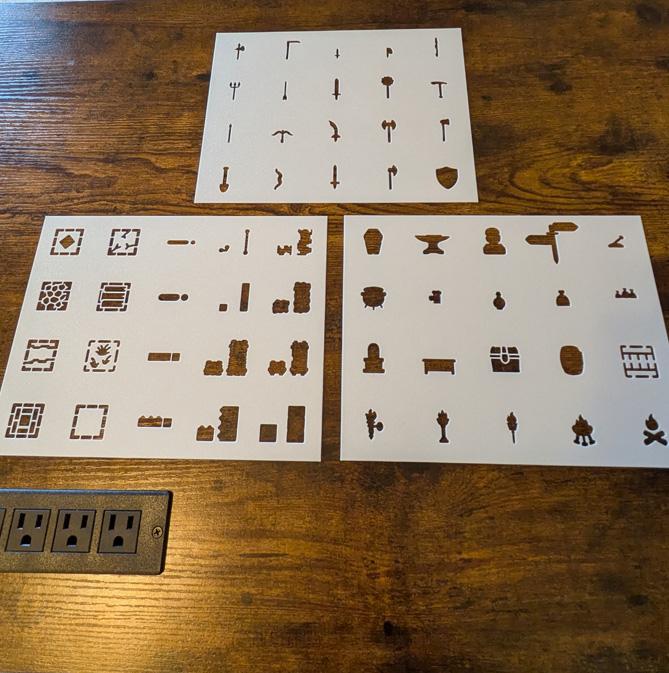
Stencil-wise, you can get 90% of tavern gameplay with:
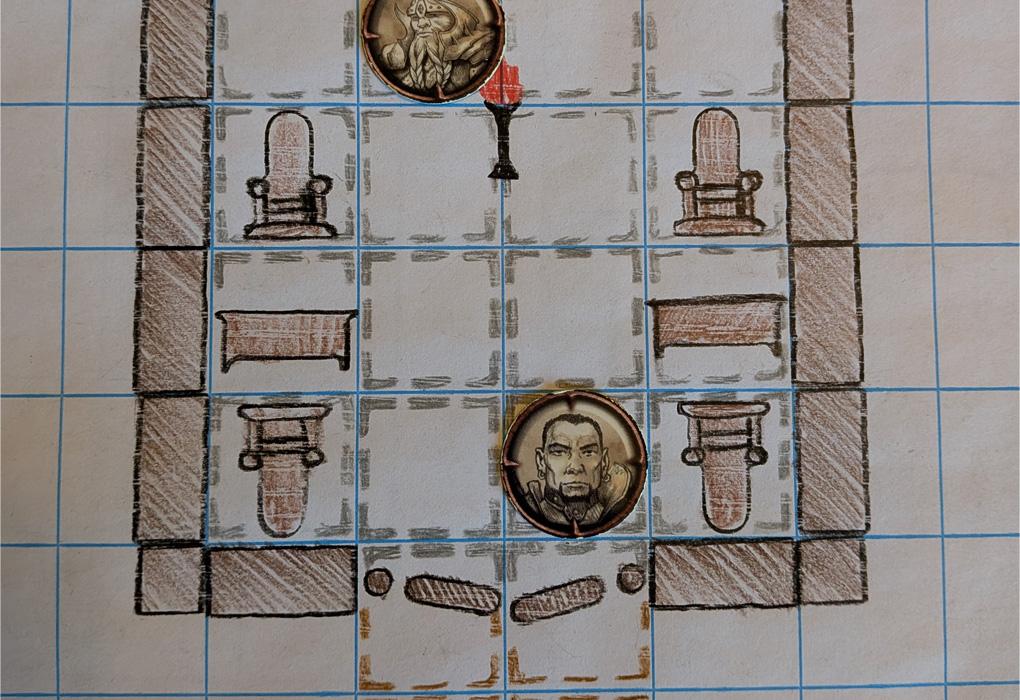
- Wood Floor + Wood Wall
- Doors (Large Door / Small Door / Square Door)
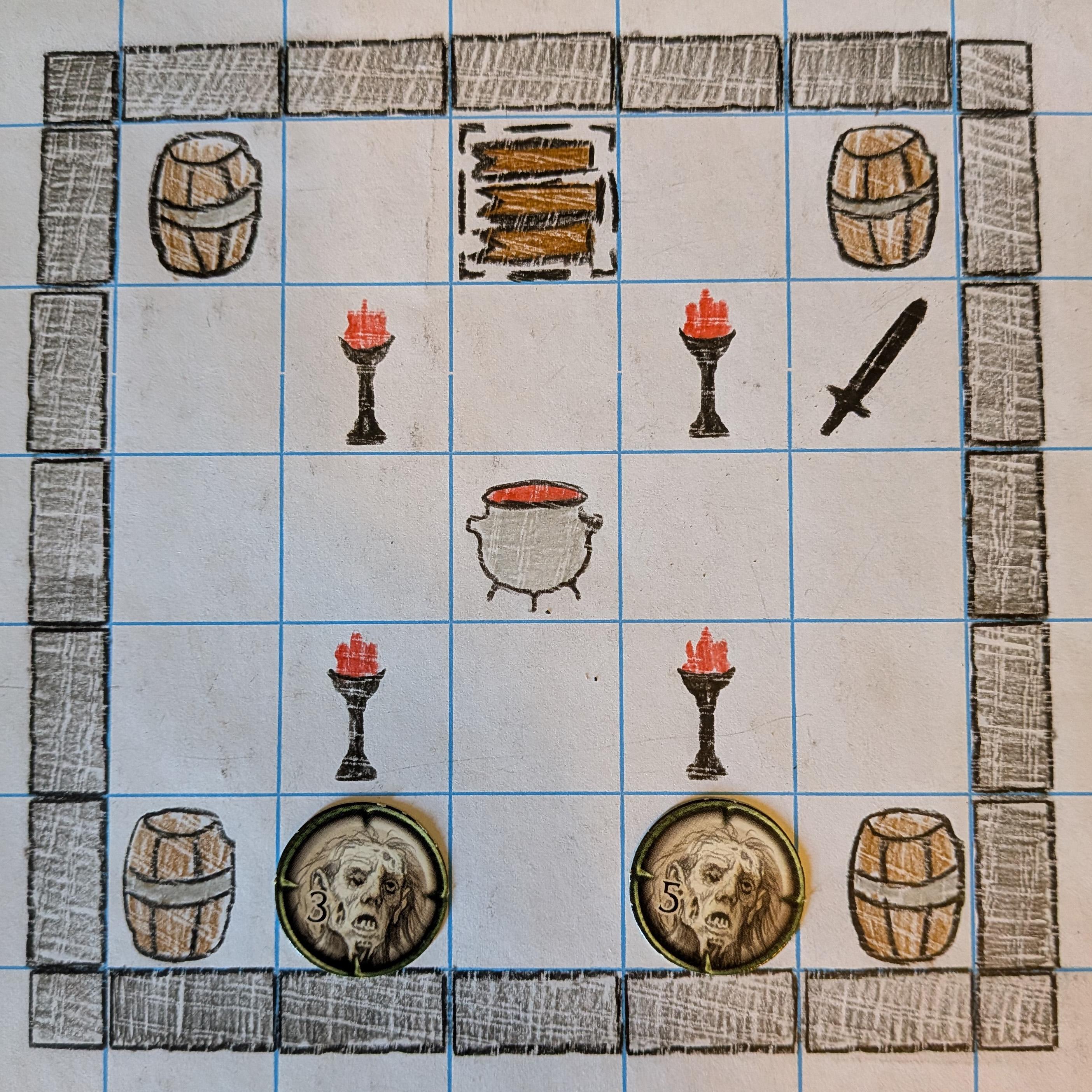
- Barrel + Crate (to imply tables, bar clutter, and cover)
- Tankard + Flask (story props + “tavern language”)
- Wall Torch / Standing Torch + Campfire (warm hearth vibe)

The Big Rule: Keep the Center Open
In tavern fights, players want to:
- rush across the room
- shove enemies into things
- run for the door
- climb onto “furniture”
If the middle is cluttered, combat becomes slow, fiddly, and hard to read.
> Tip
> Dress the edges, not the center. Let the middle be the “dance floor.”
Sightlines + Lanes = Fast Decisions
A brawl speeds up when players can see:
- where they can run
- where they can take cover
- where enemies are likely to retreat
The lane recipe (simple and reliable)
- Create 2–3 clear lanes from entrance to the far side.
- Put cover between lanes, not inside lanes.
- Make the bar side “busy” and the center “open.”
“Tables” Without a Table Stencil: Props That Read Instantly
You can imply tavern furniture with clusters of Barrels and Crates:
- 2 barrels near each other = “standing table” vibe
- crate + barrel = “service station” / “busy corner”
- a line of crates = “bar back storage” / “counter area”
Add story props (without clutter)
Use Tankard and Flask sparingly as “spotlight” items:
- one tankard near the hearth = “someone was just here”
- a flask near a back door = “smuggler vibe”
- a flask on the bar side = “poison/plot hook energy”
> Tip
> One Tankard or Flask can do more storytelling than five. Place them where you *want attention*.
Hearth Vibe: The Campfire Anchor
In a tavern, the hearth is a gravitational pull for roleplay *and* fights:
- people gather there
- it’s the warm light source
- it becomes the “ring” for a brawl
Use Campfire as the hearth symbol and frame it with Wall Torches.
Lighting language:
- Wall Torch = permanent, cozy, “this place is established”
- Standing Torch = temporary, moved during chaos, “something is happening”
Doors Make Tavern Chaos Better (Not Harder)
Most tavern scenes become fun when someone runs:
- out the front
- into the back hall
- through the kitchen
- down to the cellar
Even if you don’t draw every room, door placement makes the chase feel real.
Use doors as “scene switches”:
- Large Door = main entrance (street chaos)
- Small Door = staff-only / side exit
- Square Door = cellar door, strong door, “don’t break this easily”
> Warning
> A tavern with only one door feels like a box. Give players at least two exits so decisions matter.
# Three Tavern Layouts You Can Draw Fast
Each layout is designed to work with your stencil set and keep combat moving.
Layout 1: Tiny Roadside Tavern (Quick Brawl)
Best for: one-shots, travel encounters, “drunk bandits” scenes
Stencil recipe
- Wood Floor rectangle with Wood Wall perimeter
- 1 Large Door (front)
- 1 Small Door (back)
- 2–3 Barrel/Crate clusters along walls (cover)
- 1 Campfire hearth area
- 1–2 Wall Torches for warmth
Why it plays fast
- simple shape
- two exits
- cover exists but doesn’t block movement
Layout 2: Classic Common Room (The Reliable Workhorse)
Best for: campaign staples, recurring location, “meet the questgiver” scenes
Stencil recipe
- Wood Floor + Wood Wall
- Large Door (front), Small Door (back hall), optional Square Door (cellar)
- Bar side: a “counter line” implied with Crates
- Seating side: Barrels in small clusters (tables)
- Hearth: Campfire centered to one side
- Accent props: 1 Tankard on hearth side, 1 Flask near bar side
Why it works
- players instantly “get” where things are
- bar side becomes cover and bottleneck
- center remains a clean fight lane
Layout 3: Two-Level Brawl (Balcony Chaos)
Best for: big reveals, rival gangs, “someone throws someone over the rail”
You don’t need complex drawing to get a 2-level fight. Just create:
- a clear “upper edge”
- a few “stair lanes”
- a balcony zone with cover
Stencil recipe
- Main room as normal (wood floor/walls)
- Mark an upper balcony zone along one side (a band of space)
- Create 1–2 “stair lanes” (clear paths that connect zones)
- Put Crates on the balcony for cover
- Put Wall Torches to frame the balcony (attention)
- Add a Standing Torch near the stairs (draws players toward vertical play)
Optional spice
- Put a Flask on the balcony (plot hook)
- Put a Tankard near the stairs (someone dropped it running)
Common Tavern Map Mistakes (Easy Fixes)
- Too many “tables”: use fewer barrel clusters; keep the middle open.
- No chase routes: add a back door and a cellar door.
- Props placed randomly: cluster props near walls and corners.
- No anchor point: add a hearth (Campfire) or a clearly lit bar side.
Next Steps
To expand tavern maps into full “town scenes,” connect your tavern exits to:
- a Town Square with Cobble Stone Floor and a Signpost
- an alley hideout using Wood Wall, Small Door, and stash props (Crate, Chest, Bags)
And if your tavern is about to become a dungeon entrance, swap Wood Wall → Stone Wall and the whole story shifts instantly.