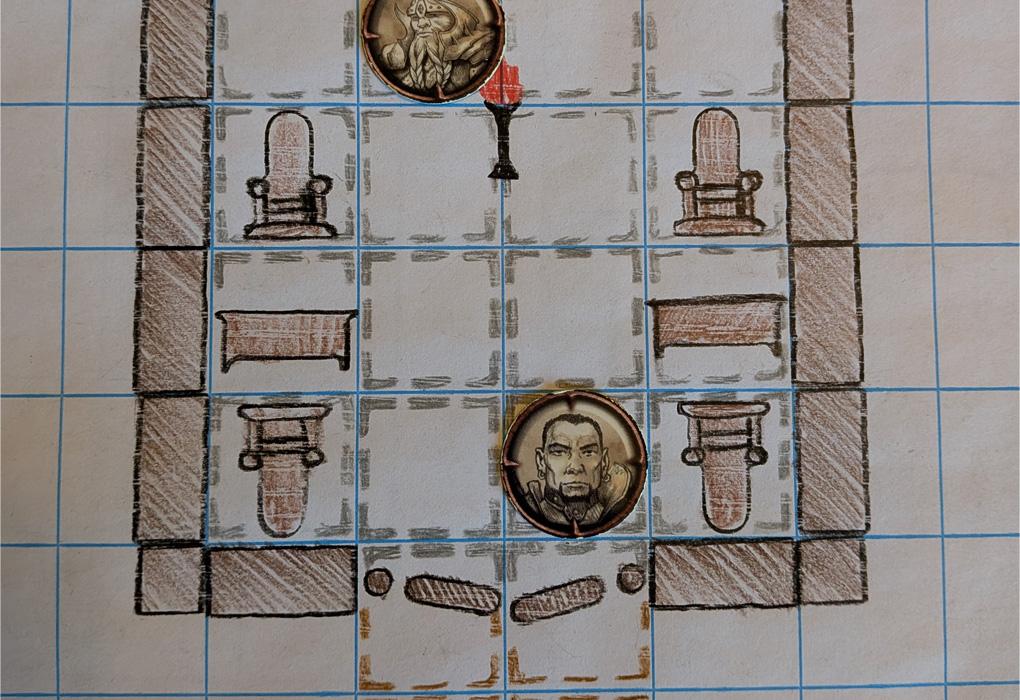
The One Rule: Readable at Arm’s Length
Your dungeon map doesn’t need to be art — it needs to be legible during play. If your players can’t tell where walls end and doors begin while sitting around the table, the encounter slows down fast.
A quick test: stand up, take one step back, and look at your map like a player would.
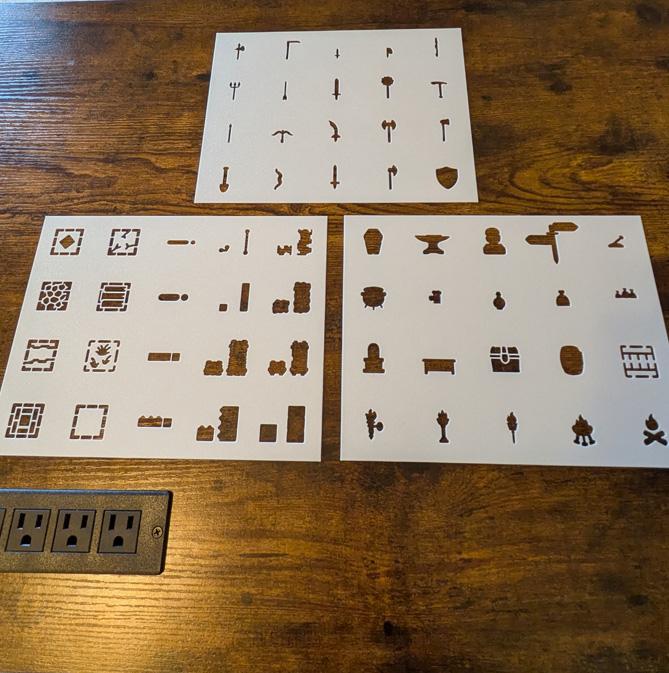
Stencil-first mapping is perfect for this because it gives you:
- consistent line thickness
- repeatable doors and openings
- fast layout changes without redrawing everything
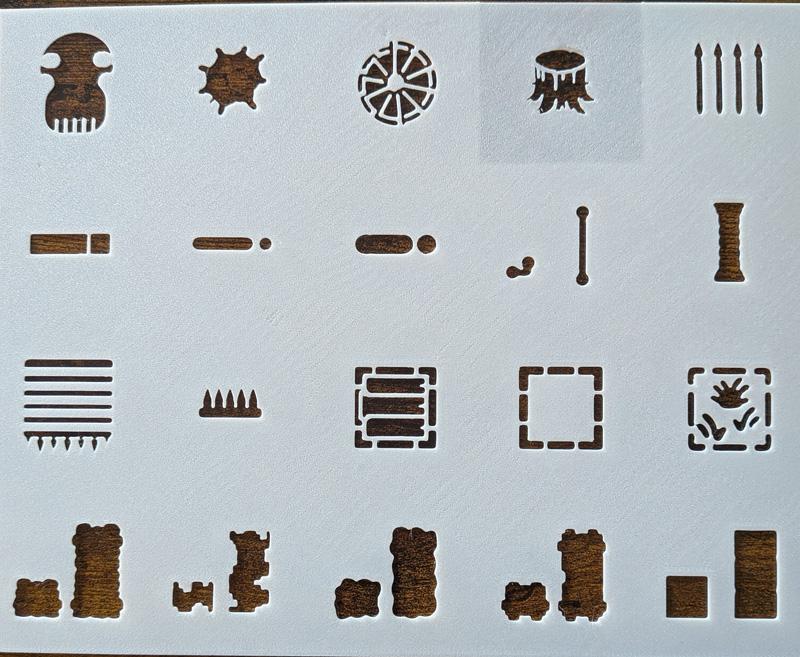
Pick the Right Wall Stencil for the Story
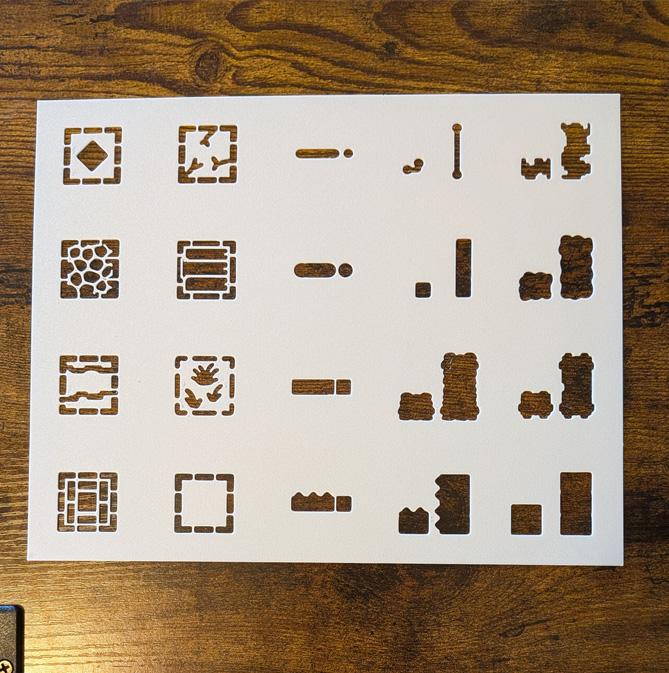
Before you draw rooms, decide what the dungeon *is*. The same layout can feel totally different just by switching the wall stencil:
- Stone Wall = classic dungeon, crypts, castles
- Wood Wall = rogue hideout, basement tunnels, mine supports
- Dirt Wall = caves, burrows, collapsed tunnels
- Cobble Wall = sewers, older city underworks, worn passages
- Ruined Wall = shattered rooms, breached fortresses, ancient tombs
- Thin Wall = “blueprint clarity” when you want the cleanest read
> Tip
> If you’re running a busy combat map, use Thin Wall for maximum readability and save texture-heavy walls (like Ruined Wall) for set-piece rooms.
Doors: Your Dungeon’s Punctuation
Doors are how players understand *flow*: where they can go, what’s “next,” and what might be dangerous.
Use consistent door symbols and keep them obvious:
- Large Door = boss doors, vault doors, throne rooms, “this is important”
- Small Door = side rooms, closets, guard rooms, storage
- Square Door = sturdy “built” doors (dwarven halls, prisons, secure facilities)
- Spiked Door = intimidation, traps nearby, cursed/evil areas, “do not touch”
Door Placement Conventions That Make Maps Feel “Real”
Use these to make your dungeon instantly believable:
- Doors at corners feel weird. Place doors on a wall with at least 1 square of “wall” on either side.
- Opposite doors create fast sightlines (great for fights). Use them intentionally.
- Double-door moments (use Large Door) should be rare — save them for drama.
> Warning
> Don’t hide doors inside messy wall lines. If a door doesn’t clearly break the wall, your players will miss it.
Corridors: The Secret Difficulty Slider
Corridor width decides whether combat is:
- a tidy marching order
- a chaotic scrum
- a tactical playground
Here are reliable defaults for 5-ft grid play:
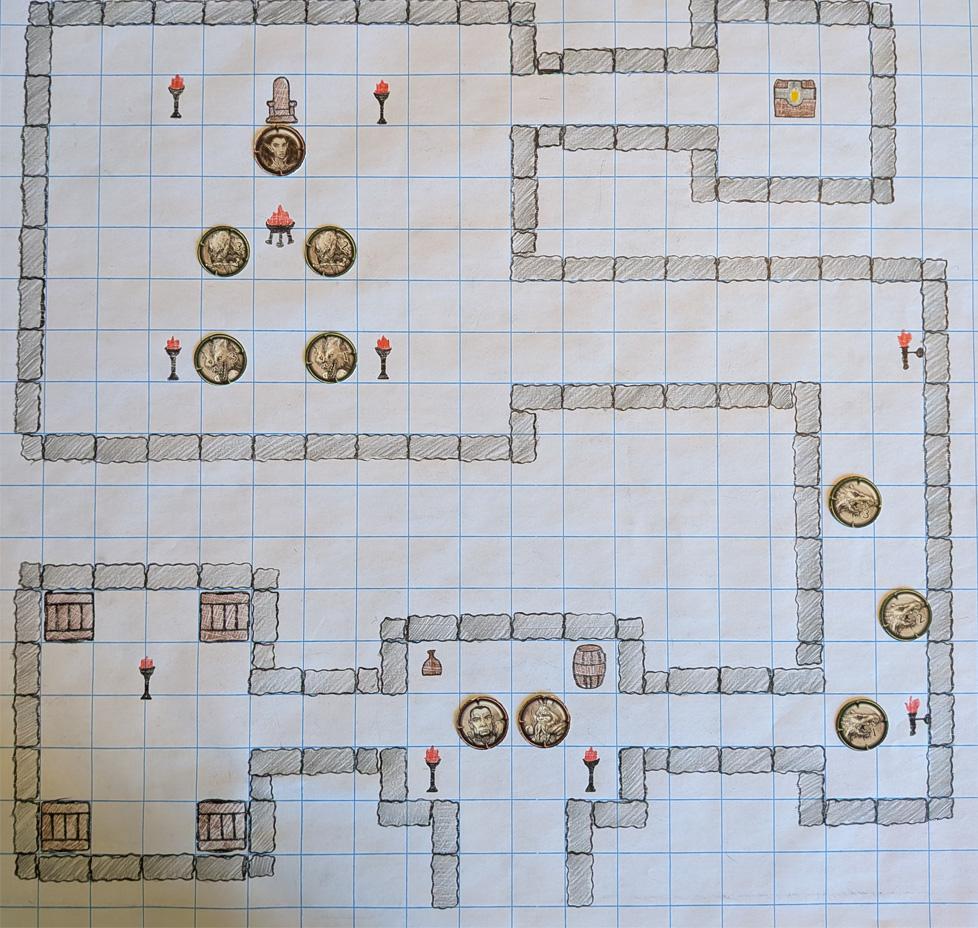
- 1-square corridors: tense, claustrophobic, great for traps and fear (but can bottleneck combats hard)
- 2-square corridors: the sweet spot — movement feels fair, chokepoints exist, flanking is possible
- 3-square corridors: tactical and fast, good for “patrolled halls” and bigger fights
A corridor trick that makes the dungeon feel bigger
Use thin connectors (1-square) between wider nodes (rooms and 2–3-square halls). It creates pacing: squeeze → release → choice.
Room Shapes That Stay Readable
Stencil mapping rewards simple shapes:
- rectangles
- L-shapes
- “T” intersections
- big circles/ovals (approx) for boss rooms (still readable if you keep the walls clean)
A great beginner target: most rooms 4×4 to 8×8 squares, with one larger “feature room” per dungeon section.
> Tip
> If you’re unsure, make the room bigger than you think. Players hate fighting in tiny boxes where minis can’t fit.
# Three Fast Dungeon Layouts (Stencil-First Templates)
These are designed to be drawn quickly with your wall stencils + door stencils, then dressed later with props (like Barrel, Crate, Chest, and torches).
Layout 1: The Gauntlet Corridor (Pressure + Pace)
Best for: one-shots, time pressure, “get to the ritual room”
How to draw it with stencils
1) Use Stone Wall (or Thin Wall) to trace one main corridor.
2) Add 3–5 small side rooms using Small Door.
3) End with a Large Door into the finale.
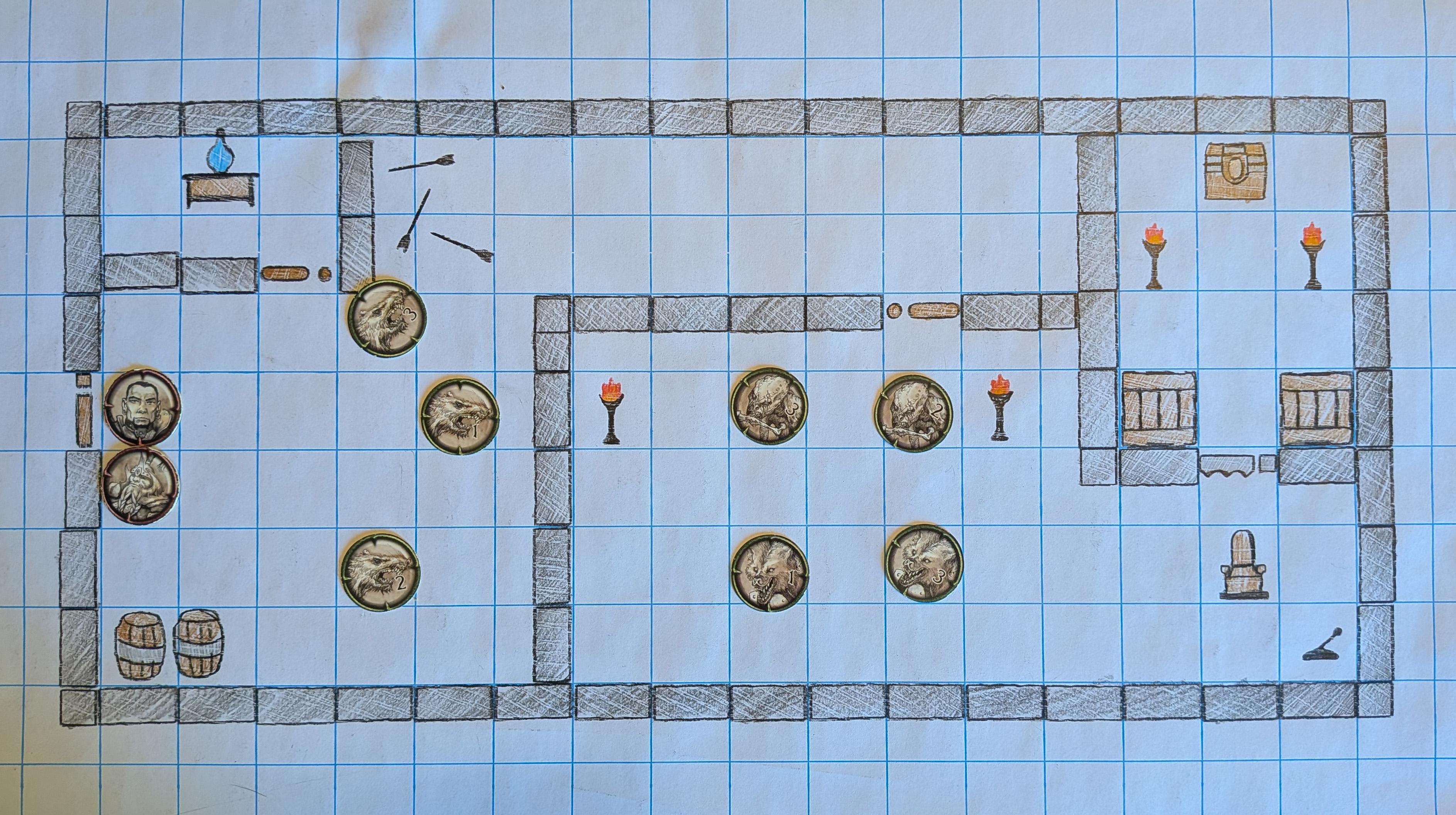
Where to use each wall type
- Stone Wall for a classic dungeon crawl
- Cobble Wall for sewers or city underworks
- Dirt Wall for an “older than old” tunnel vibe
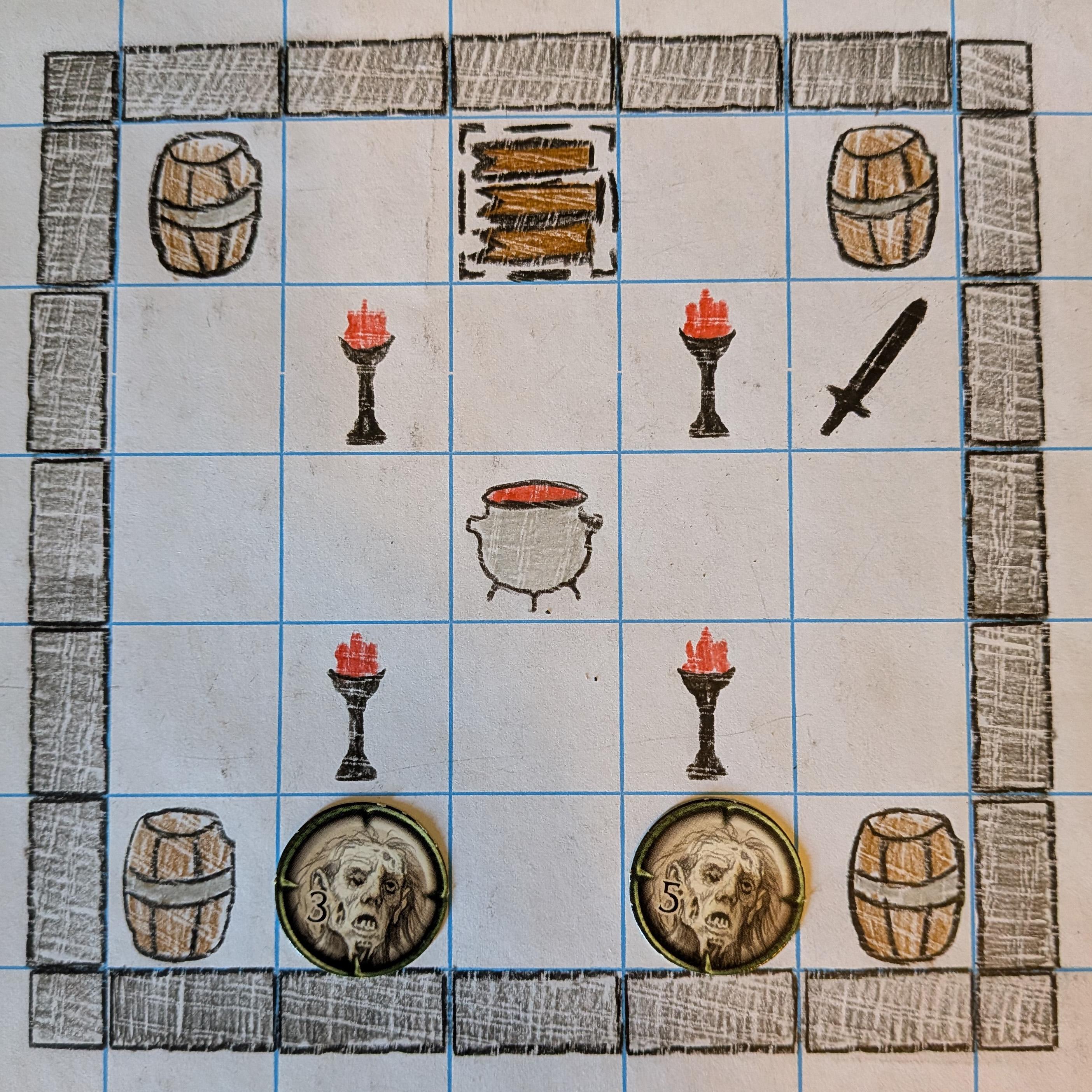
Layout 2: The Hub Dungeon (Choice Without Chaos)
Best for: campaigns, exploration, “which wing do you tackle?”
How to draw it with stencils
1) Make one central room (the hub) with Stone Wall or Cobble Wall.
2) Add 3 exits from the hub with Square Door or Small Door.
3) Put a Spiked Door on the “scary wing” so players *feel* the choice.
DM pacing hack
If the session is running long, you can quietly “close” a branch with a locked Square Door or a collapsed section drawn using Ruined Wall.
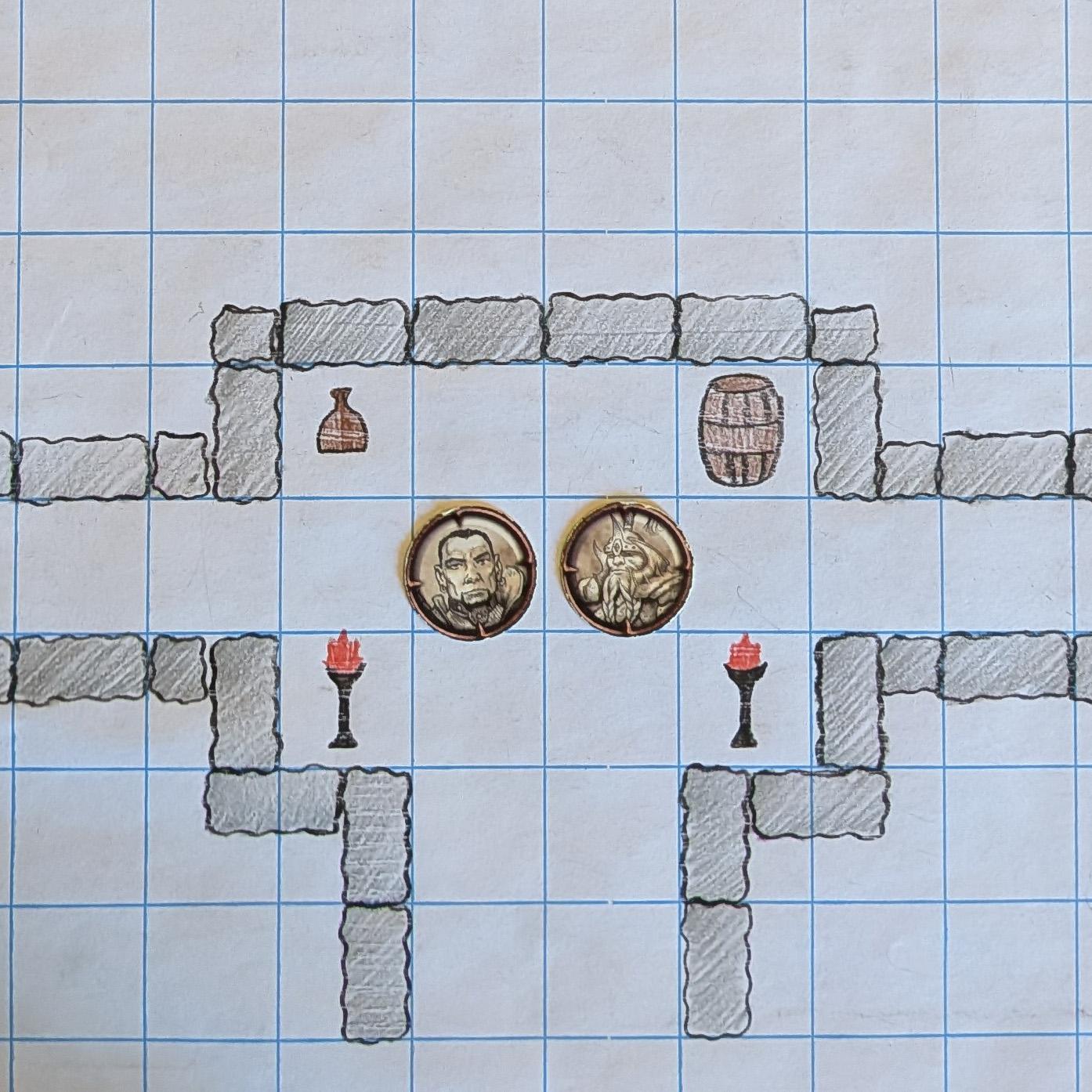
Layout 3: The Loop Dungeon (Exploration That Feels Smart)
Best for: stealth, patrols, chasing enemies, “we found another way!”
How to draw it with stencils
1) Draw two paths that reconnect into a loop.
2) Place doors sparingly; use open arch-like gaps (still a break in the wall line).
3) Make one “shortcut” feel dangerous with a Spiked Door or Ruined Wall section.
Why loops rule
Players love discovering they can flank, escape, or ambush using a second route — and you didn’t have to draw anything complicated.
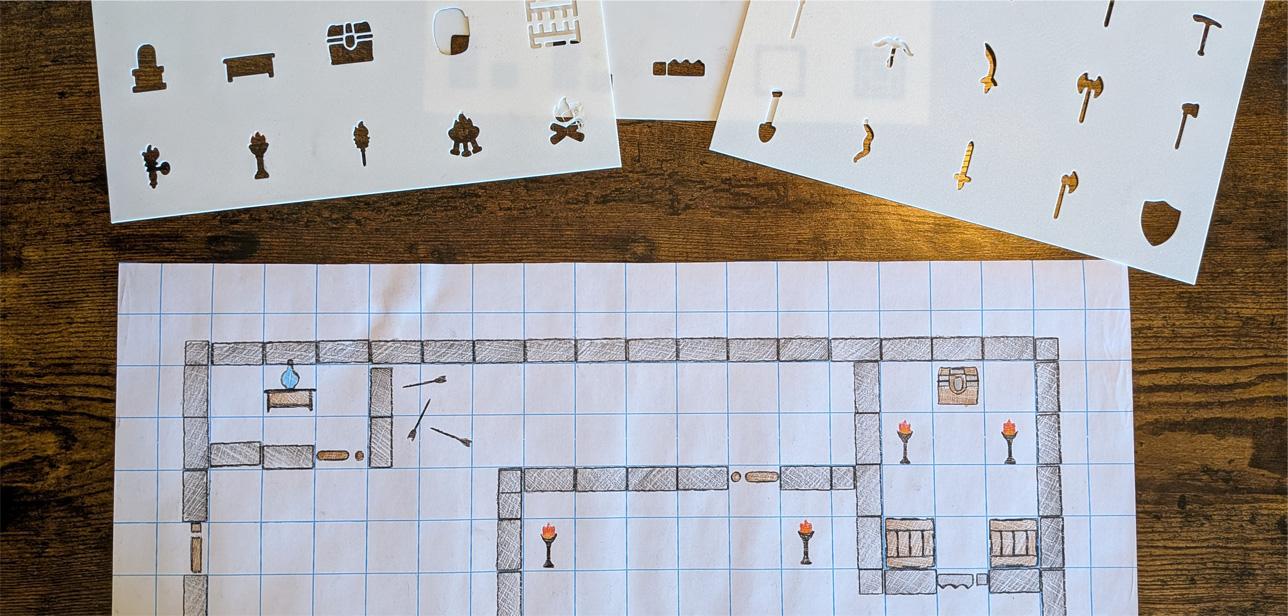
Putting It All Together: A Clean Finished Map
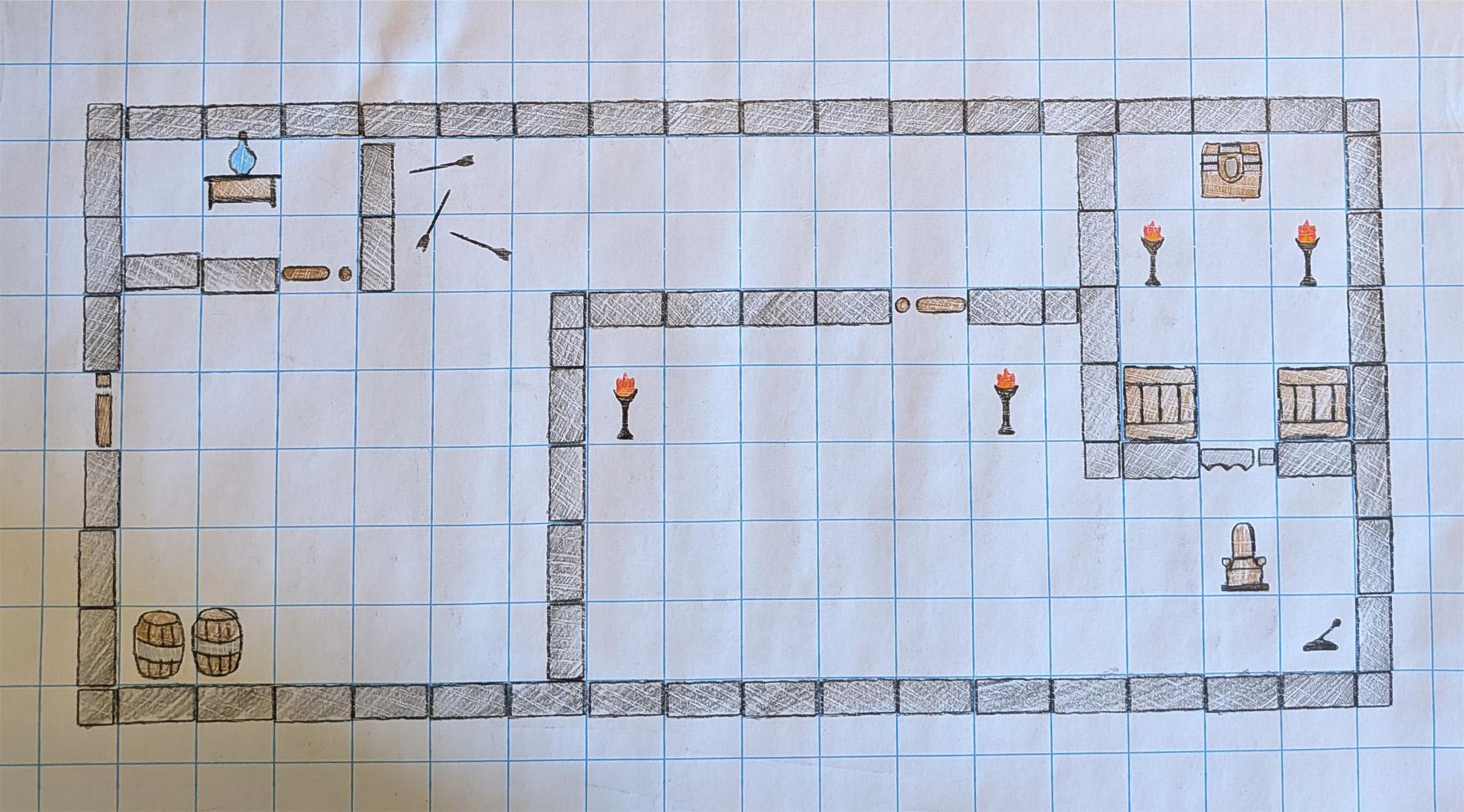
Draw clean walls → clear doors → readable corridors first. Then add minimal dressing:
- Wall Torch / Standing Torch for “important places”
- Crate / Barrel for cover
- Chest for “loot brain” (players instantly recognize it)
> Tip
> If the map feels empty, don’t add more rooms — add one prop cluster: a Crate + Barrel + Chest corner tells a story and creates tactics.
Next Steps
If you liked these layouts, build variations by swapping only two things:
- Wall type (Stone → Wood → Dirt → Ruined)
- Door type (Small → Square → Spiked → Large)
Then check out guides on dungeon dressing and map symbols to level up how quickly players read your maps.