Story Props: The Fastest Way to Make a Map Feel Alive
Walls and floors tell players where they can go. Story props tell players what this place *is*.
With just a handful of stencils, you can communicate:
- cozy vs creepy
- safe vs suspicious
- common room vs back room
- “normal tavern” vs “something is going on here”
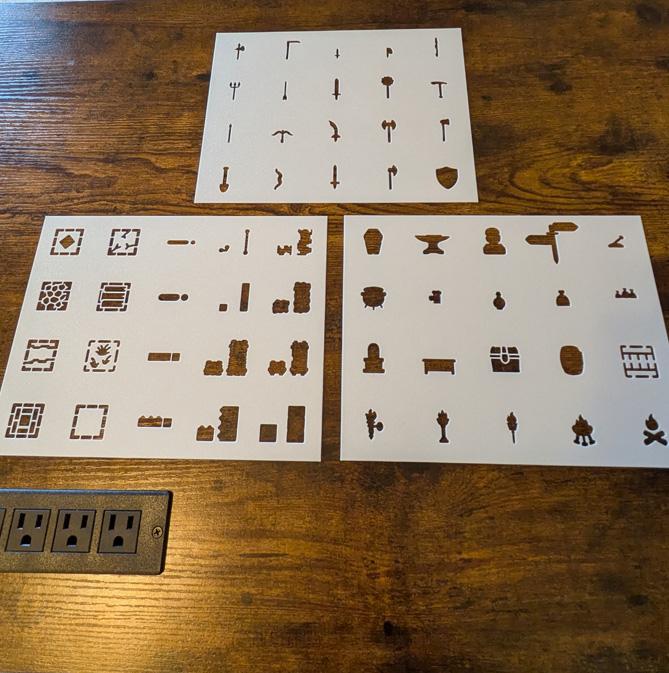
Your high-signal story prop toolkit:
- Tankard (public drinking, community, rowdy)
- Flask (private drinking, secrets, poison, smuggling)
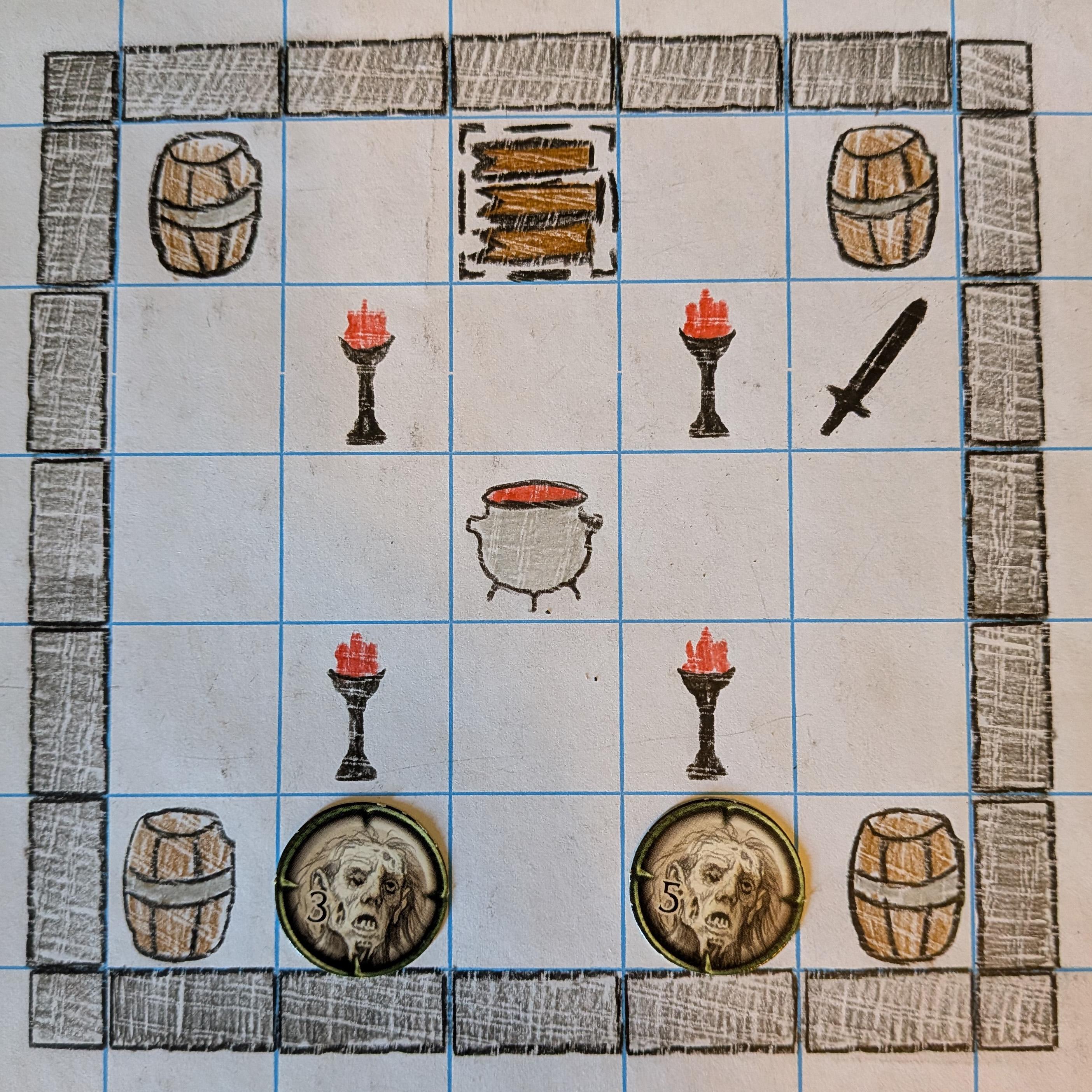
- Cauldron (magic, brew work, weird science, ritual)
- Campfire (hearth, warmth, gathering point)
- Blazer (hazard flame / magical heat / “don’t stand here”)
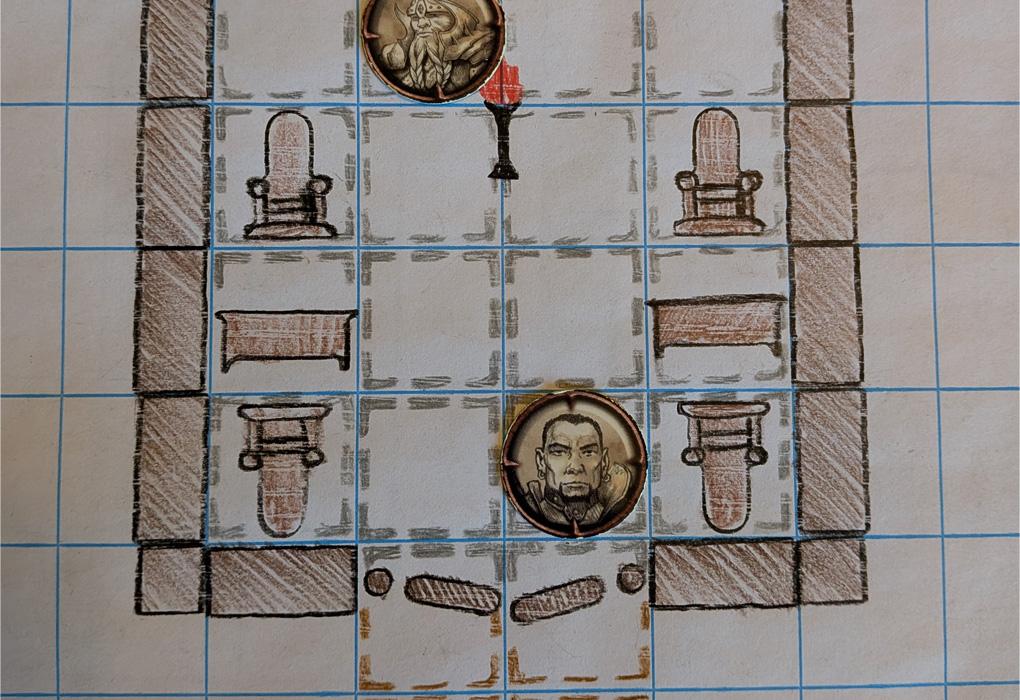
- Wall Torch / Standing Torch (attention and mood)

The Core Rule: Story Props Are Spotlights, Not Wallpaper
If everything is “special,” nothing is special.
The 2–3 Prop Rule (per room)
For most tavern rooms, pick:
- 1 anchor (Campfire hearth OR Cauldron station)
- 1–2 accents (Tankard, Flask, Torches)
That’s enough to tell a story and keep the map readable.
> Tip
> Put story props at the *edges* of the room so the center stays playable for minis.
The Hearth: Your Tavern’s Anchor Point
The hearth is where people gather—and where problems start.
Use Campfire as the hearth symbol and frame it with light:
- Wall Torch = cozy, established
- Standing Torch = active, “someone moved this” (good for chaos scenes)
Hearth placements that run great at the table
- Hearth near the middle-left or middle-right (not dead center)
- 1 clear movement lane around it
- One obvious “brawl ring” space nearby
> Warning
> Don’t place the hearth in the exact center unless you want every fight to become a traffic jam.
Tankard vs Flask: Public vs Private Storytelling
These two stencils are tiny but powerful.
Use Tankard when you want:
- “this is a lively place”
- “someone was sitting here”
- “a brawl already happened” (tankard near the floor area / lane)
Use Flask when you want:
- “someone is hiding something”
- “poison / drugs / contraband”
- “a secret meeting happened here”
Placement cheats
- Tankard near the hearth = friendly, social
- Tankard near the main door = rowdy, travelers
- Flask near a back door = smugglers
- Flask near a private corner = hush-hush deal
- Flask near a bed/room door (if mapped) = “someone’s not okay”
Cauldron Rooms: Instant Weirdness (In a Good Way)
A Cauldron tells players:
- magic is happening here
- something is brewing
- this room matters
Use it for:
- witchy tavern owner
- “back room apothecary”
- cult soup
- potion brewing corner
Cauldron staging that stays readable
- Place the Cauldron against a wall or corner (like a workstation)
- Put one Wall Torch nearby to highlight it
- If you want danger, add Blazer as the “hot zone” around it
Blazer: The “Don’t Stand There” Zone
Blazer is perfect for marking:
- magical flame
- spilled burning alcohol
- a cooking accident
- a ritual hazard area
How to use Blazer without turning the map into chaos
- Put one blazer zone near a focal point (hearth or cauldron)
- Make it create a choice: “go around” or “risk it”
- Don’t sprinkle it everywhere—one hazard beats five
> Tip
> One blazer near the bar/hearth instantly turns a brawl into a tactical scene (“push them into the fire!”).
# Themed Tavern Variants (Same Layout, Different Story)
You can re-skin your tavern in minutes by swapping just 2–3 props.
Variant 1: Cozy Roadhouse (Warm & Safe… Mostly)
Stencil recipe
- Campfire hearth
- 2 Wall Torches framing the hearth
- 1–2 Tankards near the hearth / main lane
- Optional: one Standing Torch near the door (busy night)
What it says:
- comfort, community, loud laughter, friendly tension
Variant 2: Witchy Brew Room (The Back Room Is the Plot)
Stencil recipe
- Cauldron in a corner or back room
- 1 Wall Torch highlighting it
- 1 Flask nearby (ingredients, poison, mystery)
- Optional: Blazer as the risky heat zone
What it says:
- magic, bargains, creepy vibes, “don’t drink that”
Variant 3: Hunter Lodge (Rugged, Practical, Dangerous)
You mentioned “weapons rack vibe”—you can signal that with your weapon stencils as wall decor / trophies.
Stencil recipe
- Campfire hearth (lodge warmth)
- 2 Wall Torches for warm lighting
- 2–4 weapon icons as trophies or posted gear:
- Bow, Axe, Sword, Dagger
- 1 Flask near the “private table” (hard conversations)
What it says:
- capable people, quiet threats, “these patrons know how to fight”
> Tip
> Keep weapon props to the edges. They’re story flavor, not battlefield clutter.
Quick Placement Recipes (Use These Anywhere)
“Secret Deal” Corner
- Flask + Standing Torch (someone is here now)
- Place it near a back door or shadowy edge.
“Rowdy Night” Signal
- Tankard near the main lane and a second tankard near the hearth.
- Players will immediately expect noise and trouble.
“Something’s Wrong” Signal
- Cauldron + Wall Torch + Blazer
- It reads as “dangerous work” without a single spoken word.
Common Mistakes (Easy Fixes)
- Too many story props: stick to the 2–3 prop rule.
- No anchor point: use Campfire or Cauldron to make the room feel intentional.
- Lighting everywhere: torches should highlight, not wallpaper.
- Props in the center: dress edges; keep the middle playable.
Next Steps
Once you’ve mastered story props:
- combine them with Barrel/Crate clusters to create cover for brawls
- connect taverns to back areas using Small Door and “secret deal” corners
- re-skin the same tavern into a dungeon lair by swapping warmth (campfire) for menace (blazer + darker torch cues)
A few well-placed stencils can turn a plain rectangle into a location players remember.