Landmarks: The Fastest Way to Add Gameplay
Walls show *where you can go*. Landmarks show *what you can do*.
When you add a few clear interaction landmarks—Lever, Doors, and Lighting—your map stops being a diagram and starts being a scene.

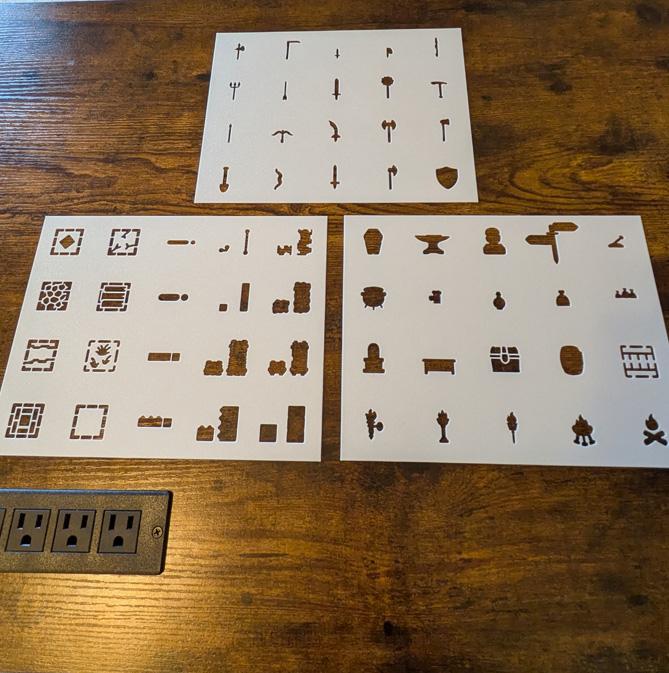
This guide focuses on a stencil combo that creates instant “player questions”:
- Lever (interaction)
- Large Door / Small Door / Square Door / Spiked Door (choices + consequences)
- Wall Torch / Standing Torch / Campfire / Blazer (attention + mood)
Door Language: Make Players Feel the Right Thing
Door stencils are your simplest “sign system.” Players read them like punctuation.
Use doors as signals:
- Large Door = important, dramatic, “this is the main event”
- Small Door = side path, storage, optional discovery
- Square Door = heavy, secure, “this door has rules”
- Spiked Door = menace, trap vibes, cursed space, “do we even touch it?”
> Tip
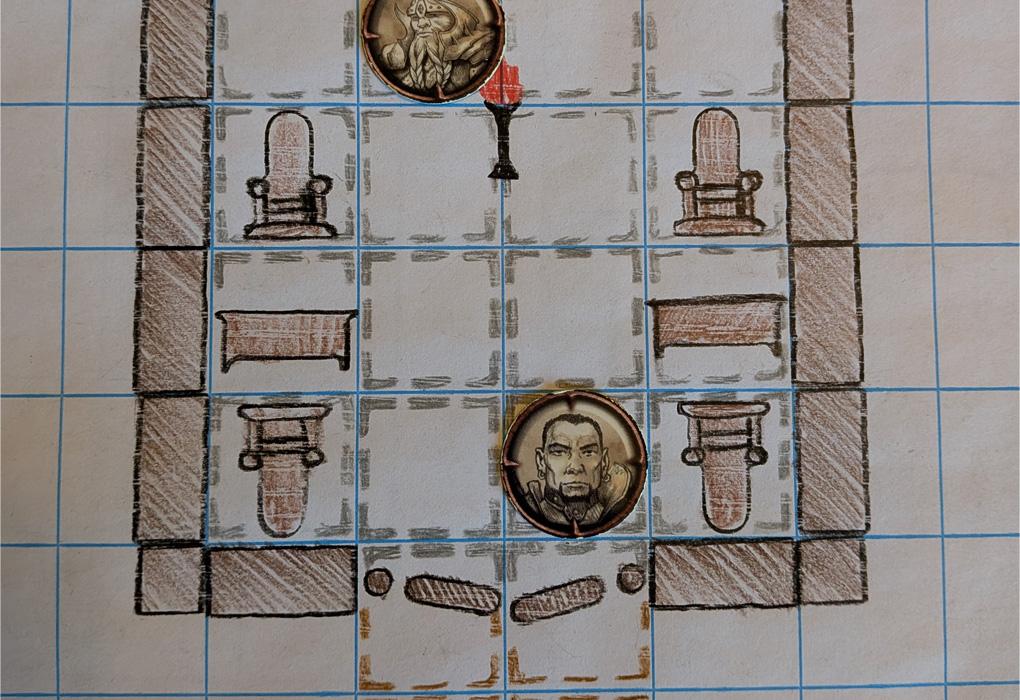
> If you want a door to feel like a boss fight *before* the boss fight, make it a Large Door and frame it with Wall Torches.
Lighting as Gameplay: Light Points at What Matters
Lighting isn’t just vibe—it’s guidance. Your players’ eyes will follow the light.
Here’s the “lighting language” that stays readable at the table:
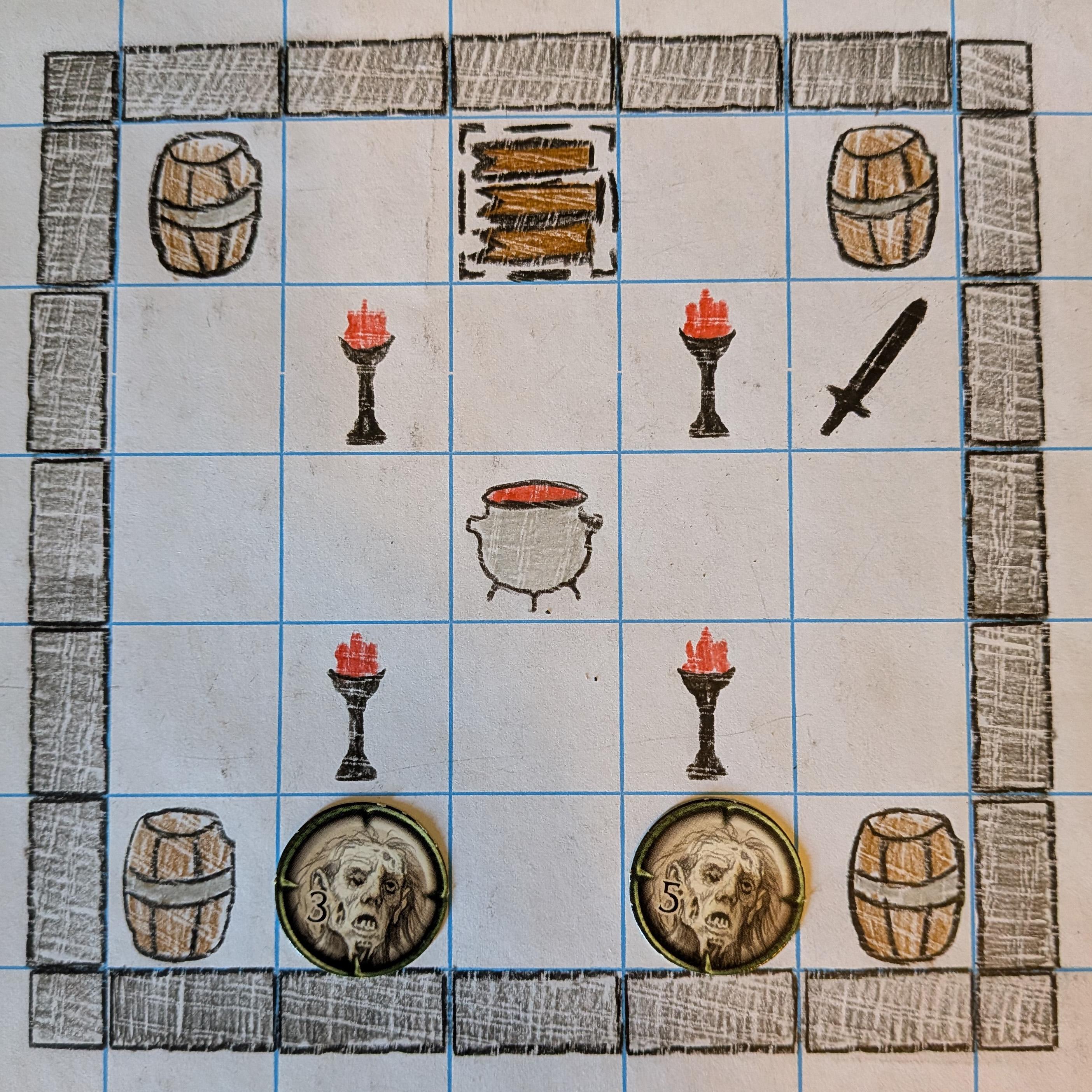
- Wall Torch = permanent, deliberate, “this place is maintained”
- Standing Torch = temporary, “someone is here *right now*”
- Campfire = social space, camp, ritual circle, “gather around”
- Blazer = hazard zone / magical flame / “do not stand here”
How to place light so players understand instantly
- Put light near objectives (like a Lever)
- Put light near choices (like multiple doors)
- Put light near danger (like a Spiked Door or a Blazer)
> Warning
> If everything is lit, nothing feels important. Use lighting *selectively*.
The Lever Rule: A Lever Should Always Do One Big Thing
Levers are best when they create a crisp question:
- “Pull it now or later?”
- “Is it trapped?”
- “Do we split the party?”
You don’t need complex mechanics. You need clear consequence.
Lever placement patterns (and what they cause)
- Lever near the entrance: creates a “panic button” / alarm feel
- Lever across the room: forces movement under pressure
- Lever next to a door: makes cause-and-effect obvious (good for puzzles)
> Tip
> If you want the lever to be a “mid-fight objective,” place it across the room and light it with a Standing Torch so no one misses it.
# Three Lever Room Templates (Drop-In Scenes)
These templates use only: Lever + Doors + Torches + Campfire/Blazer. Add walls/floors however you like.
Template 1: Alarm Lever Room (Instant Urgency)
What it is: guards have an alarm lever that changes the dungeon if pulled.
Stencil build
- Small Door (entry) into the guard room
- Lever behind partial cover (or simply on the far wall)
- Standing Torch near the lever (active post)
- Wall Torch near the exit door (permanent light)
- Optional consequence door: Square Door (locks down) or Large Door (reinforcements)
Simple outcomes (pick one)
- Pull lever → Square Door slams shut elsewhere (escape route closes)
- Pull lever → Large Door opens (reinforcements arrive)
- Pull lever → lights change (swap “safe” torches to “alarm” vibe)
Template 2: Gate Room (One Lever, One Big Consequence)
What it is: a lever controls a major barrier.
Stencil build
- A big barrier door: Large Door (vault/gate)
- A tempting side route: Small Door or Square Door
- Lever placed where it must be contested
- Wall Torches framing the Large Door (importance)
- Blazer near the lever (hazard zone / “don’t stand here”)
Why it works
Players instantly understand:
- lever ↔ big door
- standing in the hazard zone is risky
- the side door is the “coward route” (or the smart route)
Template 3: Puzzle Triad (Light Makes the Answer Readable)
What it is: three doors, one correct path (or three different outcomes).
Stencil build
- Three exits: Small Door, Square Door, Spiked Door (different vibes)
- Lever in the center (or off to one side)
- Use lighting as “hint language”:
- Put a Wall Torch by the “true” door (stable, safe)
- Put a Standing Torch by a risky door (temporary, suspicious)
- Put a Blazer by the cursed door (danger cue)
Puzzle clarity rule
Players should be able to say:
“Lever in the center, three doors, the lighting tells us which one is safest.”
If they can’t, simplify.
Quick Clarity Checklist (The “One Sentence” Test)
A room is clear when a player can describe it in one sentence.
Example:
- “There’s a Lever across the room under a Standing Torch, and a Large Door framed by Wall Torches.”
If your room fails the test, fix it by doing one of these:
- remove one landmark
- move the lever into a clearer spot
- use lighting to highlight the objective
- swap door types to better signal consequence (Spiked Door for danger, Large Door for importance)
Next Steps
Once you’re comfortable with landmark gameplay:
- add dressing for cover (like Barrel, Crate, Chest) in the rooms where levers matter
- build “choice rooms” using door language (Square Door vs Spiked Door)
- use Campfire as a social landmark (cult ritual, camp, negotiation scene)
Landmarks are how you make maps that *run themselves*—clear, fast, and fun at the table.